True Bias Tobie Jacket: Testing the Fit Before Cutting Precious Fabric
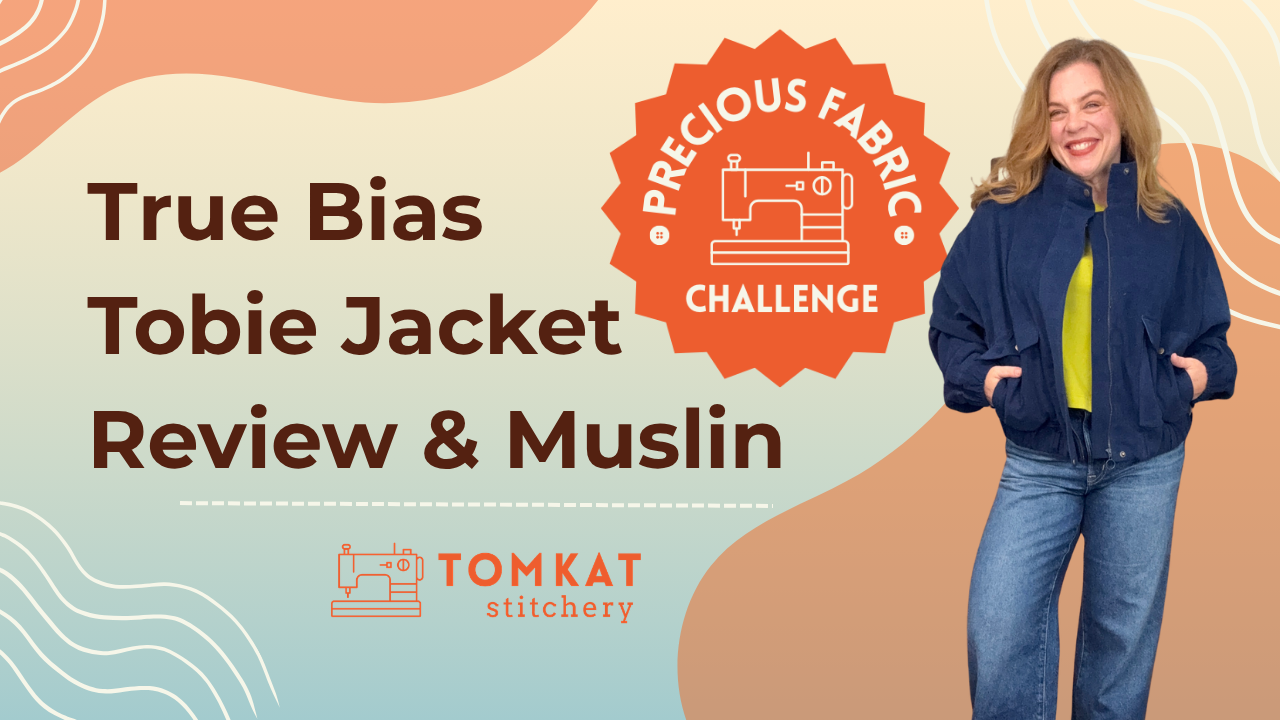
If you have a special fabric in your stash, it can be difficult to work up the courage to finally cut into it. One of the best ways to feel more confident is to make a wearable muslin first—and that is exactly what I did before using my precious wool double gauze.
I chose the True Bias Tobie Jacket, a relaxed, oversized bomber-style jacket with two distinct views. My first version gave me the opportunity to test the fit, practice the construction, and make a few design decisions before cutting into the fabric I have been saving.
This corduroy version is absolutely wearable and will have a place in my fall wardrobe. At the same time, it taught me exactly what I want to change for my final jacket.
Read on or watch the video below to see how the Tobie Jacket fits, the adjustments I made, and what I learned from sewing this wearable muslin.
Meet the True Bias Tobie Jacket
The True Bias Tobie is an oversized, fully lined bomber jacket with dropped shoulders and plenty of relaxed ease. It is available in two views that use different collars, pockets, and finishing details.
View A
- Traditional bomber-style neckline
- Rib knit neckband, cuffs, and waistband
- Welt pockets
- Exposed center-front zipper
- Zipper shield behind the zipper
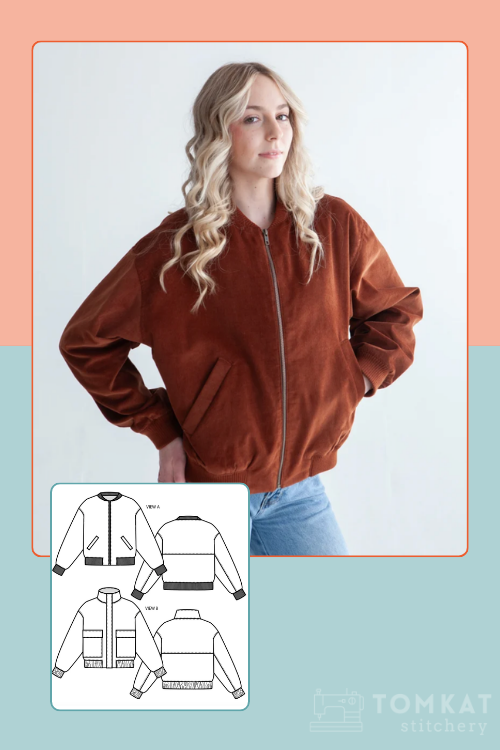
View B
- Stand-up collar
- Self-fabric cuffs and waistband with elastic inside
- Front zipper cover with two snaps
- Clever double-layer patch pockets
- Zipper shield behind the zipper
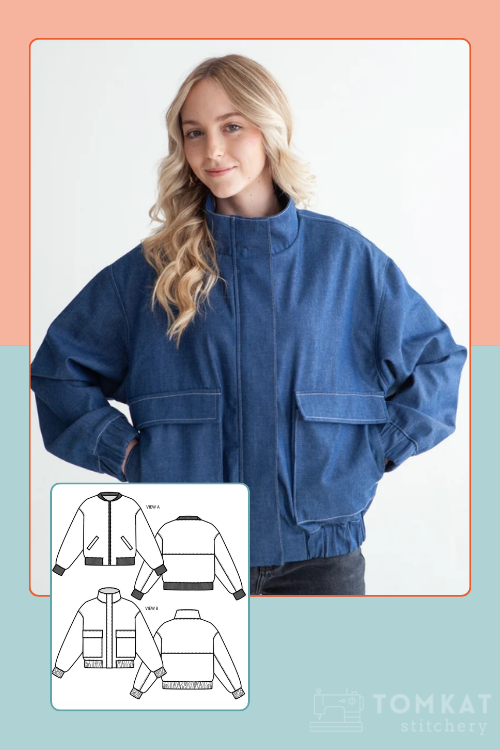
I made View B for my wearable muslin. The patch pockets were one of my favorite features because they function as two pockets in one. You can unsnap the front and place something inside the lined patch pocket, or slide your hand behind it as you would with a welt pocket.
When the instructions tell you to cut four pocket and lining pieces, you really do need all four. Each side of the jacket uses two layers to create that double-pocket design.
The pattern also includes a two-piece sleeve and a seam across the back that lines up with the sleeve seam. These details add visual interest to an otherwise streamlined jacket.
Sewing My Corduroy Wearable Muslin
For this first version, I used an inexpensive cotton corduroy* from University of Sewing (Use code TomKat for 15% off your fabric purchase). The floral lining also came from University of Sewing, and it adds such a fun surprise inside the jacket. (Grab these fabrics, or anything else that catches your eye, for 15% off when using code TomKat*)
Because this corduroy released some dye when it was first cut, the store packaged it separately for me. I washed and dried it as soon as I got home. That first wash seemed to take care of most of the excess dye, although I still noticed a little blue on my fingernails while sewing.
There was no transfer to my ironing board or clothing, but the corduroy did leave plenty of little blue fibers around my sewing room. If I were using this fabric for pants, I would probably wash them separately for the first couple of washes just to be safe.
The fabric sewed beautifully and made a great choice for a wearable muslin. It was affordable enough that I did not feel nervous about experimenting, but the finished jacket is still something I am excited to wear.
What is a wearable muslin?
A wearable muslin is a test garment made from fabric you would be happy to wear if the project turns out well. It allows you to evaluate the size, proportions, and construction before using a more expensive or irreplaceable fabric.
This jacket is not perfect—and perfect does not exist—but it is a very successful garment. I can wear it throughout the fall while using everything I learned to make my precious-fabric version even better.
Is the True Bias Tobie Jacket Difficult to Sew?
True Bias rates the Tobie Jacket as an advanced sewing pattern. Its construction includes a zipper, lining, pockets, snaps, elastic casings, and a bagged lining, depending on the view you choose.
The instructions do not provide the same level of hand-holding that a beginning sewist may want, but I still found them detailed and easy to follow. They offered significantly more guidance than I would expect from many commercial jacket patterns.
I completed my jacket in two sewing sessions over about a day and a half. I estimate that I spent six or seven hours sewing it altogether.
It had been a while since I had made a jacket, and this project reminded me how much I enjoy the process—especially bagging a lining. The construction was so much fun and produced a beautifully finished interior.
An adventurous beginner could attempt this pattern, especially if they already have some general sewing experience. Take your time, read each step carefully, and consider practicing unfamiliar techniques before using your final fabric.
Fitting the True Bias Tobie Jacket
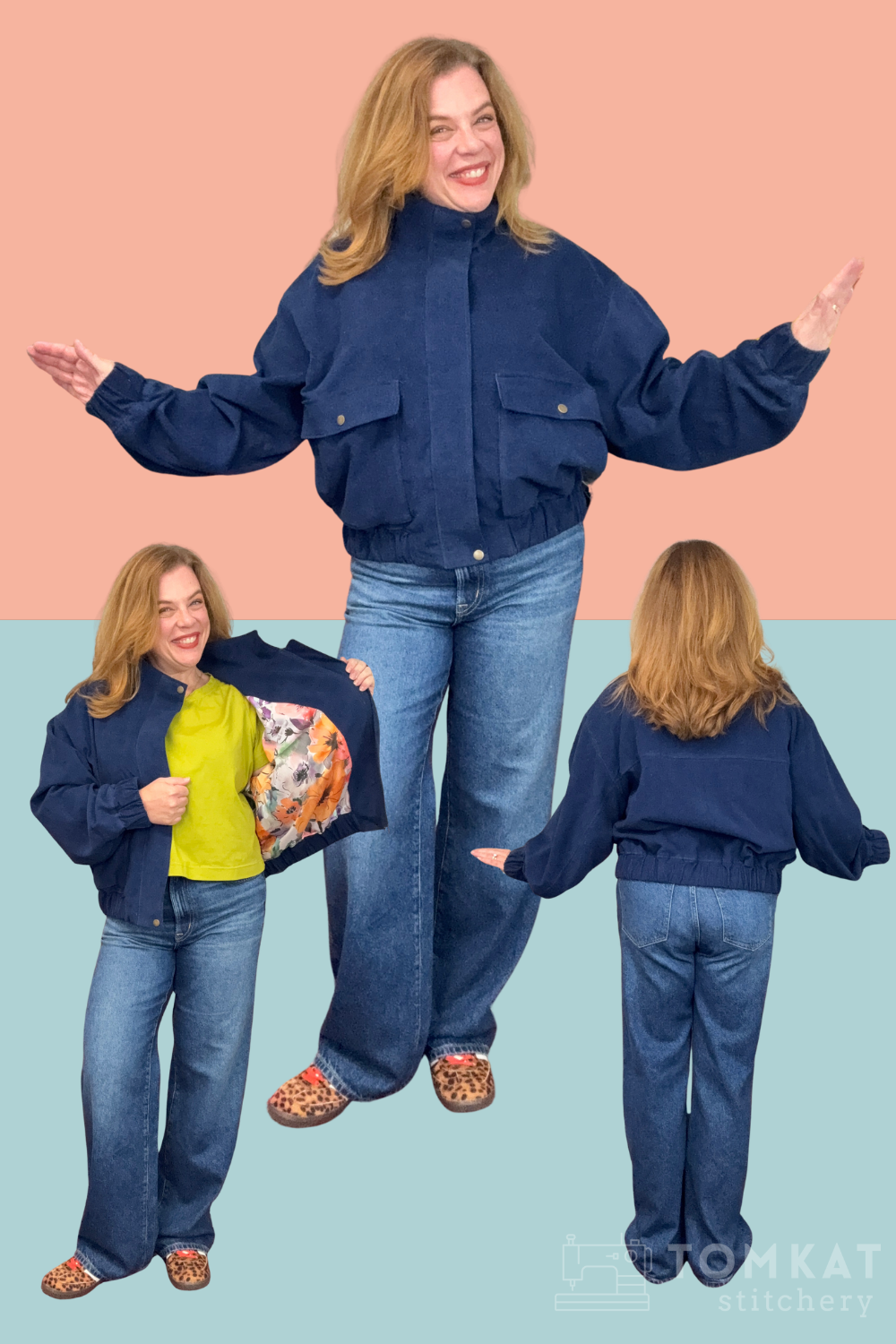
The Tobie is intentionally oversized, with dropped shoulders and plenty of ease. I did not want to remove the relaxed character of the jacket, but I also needed to keep those proportions from overwhelming my 5-foot-2-inch frame and short torso.
For my wearable muslin, I made the following choices:
- Sewed a straight size 10
- Shortened the jacket body by one inch
- Shortened all coordinating body, facing, and lining pieces
- Made no full bust adjustment
- Made no changes to the sleeves before sewing
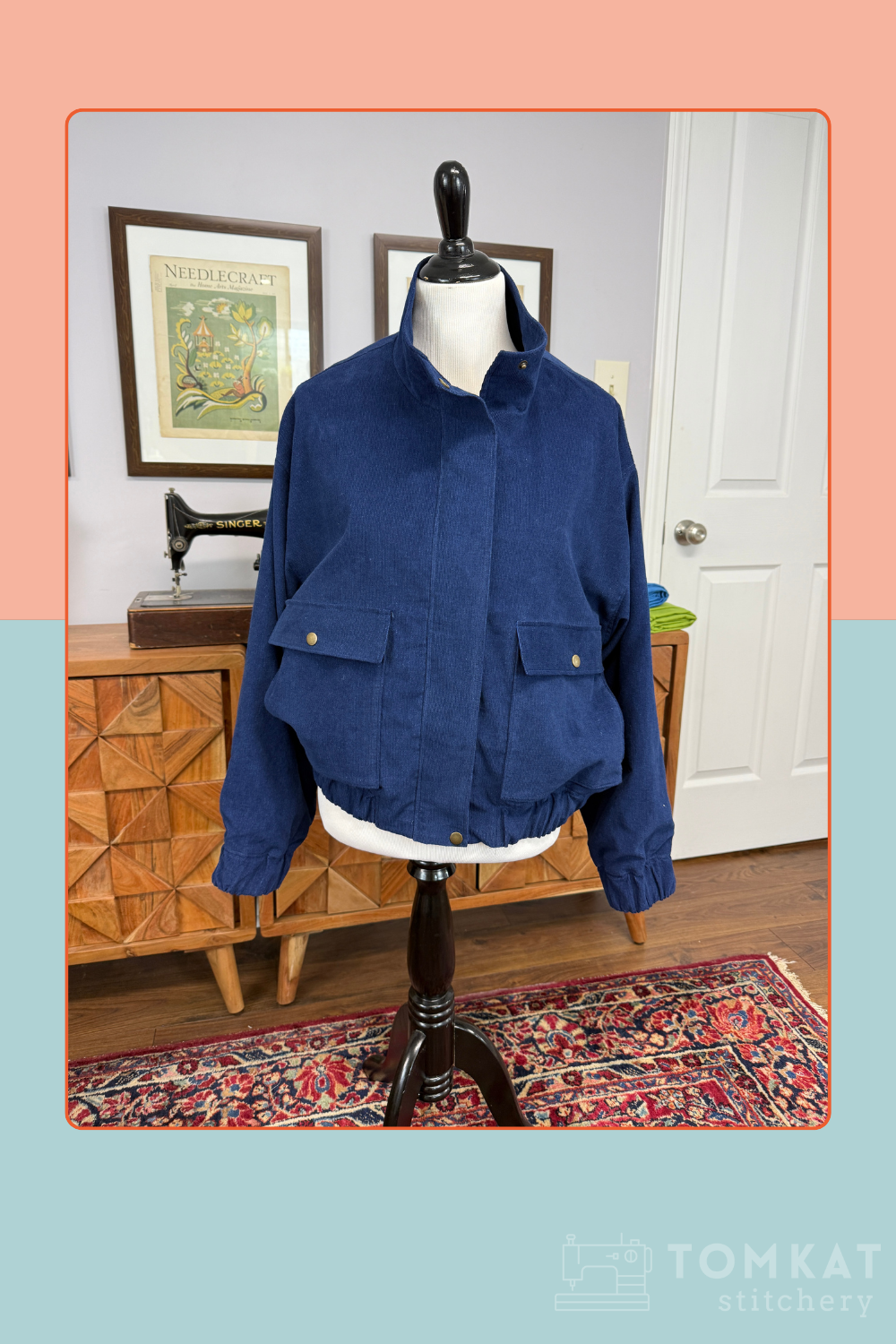
True Bias drafts this pattern for a C sewing cup, which represents a three-inch difference between the upper-bust and full-bust measurements. Depending on the style and amount of ease, I do not always need a full bust adjustment in a C-cup pattern. The Tobie had enough room that I did not need one here.
Shortening the body by one inch was a good decision. The finished length works well with my short torso and prevents the oversized silhouette from feeling too big on my frame.
Do I need to shorten the Tobie Jacket sleeves?
Although I am only 5 feet 2 inches tall, my arms and legs are proportionally closer to those of someone who is about 5 feet 4 inches. I often shorten bodices without needing to shorten sleeves.
The sleeves on this version are completely wearable, but they extend slightly farther over my hands than I prefer. For my precious-fabric jacket, I plan to:
- Keep the one-inch reduction in the body
- Shorten the sleeves by approximately half an inch
- Preserve enough sleeve length for the intended slouchy appearance
I could remove the cuffs and shorten this finished jacket, but I do not think that is necessary. The difference is small, and I am happy to wear this version exactly as it is.
Using a Wearable Muslin to Make Design Decisions
A wearable muslin is helpful for more than checking fit. Sewing the complete jacket allowed me to practice every construction step before working with my wool double gauze.
That is especially important because the double gauze has two delicate, loosely woven layers. I do not want to unpick stitches from it if I can avoid it. Now that I have sewn the entire pattern once, I know what to expect and where I need to slow down.
The muslin also helped me think through the design of my final jacket. I prefer the traditional neckline from View A, but I am still considering the cuffs and waistband. I could use ribbing as drafted for View A or combine that neckline with the self-fabric finishes from View B.
Instead of cutting every piece at the beginning, I plan to wait before cutting the collar, cuffs, and waistband. Once the main jacket is assembled enough to try on, I can compare the self fabric with the ribbing colors I have selected. Seeing everything together should make that decision much easier.
I am leaning toward ribbing for all three areas so the collar, cuffs, and waistband feel cohesive, but the wearable muslin reminded me that I do not have to commit too early.
Planning the Lining and Pockets
I believe I have enough purple silk to line the body of my precious-fabric jacket. The purple will create a beautiful contrast with the wool double gauze and make the inside feel just as special as the outside.
For the welt pocket bags, however, I plan to use a more stable fabric. Even though the pocket lining will be hidden inside the jacket, I prefer a fabric with more structure in that area. This is another small decision that should help the finished jacket hold up well over time.
Is Making a Wearable Muslin Worth It?
For a project like this, absolutely. My corduroy Tobie Jacket gave me the chance to:
- Confirm the pattern size
- Test the finished length on my body
- Evaluate the sleeve length
- Practice the complete construction process
- Experience sewing a bagged lining
- Compare finishing options for the final jacket
- Avoid experimenting on delicate, expensive fabric
Best of all, I did not end up with a throwaway test garment. I now have a comfortable corduroy jacket that I am excited to wear all fall.
Final Thoughts on the True Bias Tobie Jacket
I am over the moon with how this jacket turned out. The relaxed fit is comfortable, the interior is beautifully finished, and the pocket design on View B is especially clever.
I highly recommend the Tobie Jacket to experienced sewists and adventurous beginners who are ready for a more involved project. The pattern includes enough interesting construction details to keep the sewing process engaging, but it still creates a practical jacket that can become a true wardrobe workhorse.
Most importantly, this wearable muslin has given me the confidence to move forward with my precious wool double gauze. I know how the pattern fits, I have practiced the construction, and I have a clear plan for the few changes I want to make.
The journey with my precious fabric continues—and now I am one step closer to making the best jacket possible from it.
*This post contains affiliate links. If you make a purchase through one of these links, TomKat Stitchery may earn a small commission at no additional cost to you. Thank you for supporting TomKat Stitchery!