My 3 Favorite Jacket Fabrics for Fall
Fall sewing may not be at the top of everyone’s list at the end of July. I’m still happily sewing sundresses and enjoying every bit of summer sewing I can fit in! But if you want your handmade jackets ready when those first cool mornings arrive, now is a great time to start planning.
When I’m choosing fabric for a fall jacket, I’m usually not looking for something that needs to keep me warm in freezing temperatures. I want a lightweight outer layer I can wear when the evenings start to cool off, the mornings feel a little brisk, or an outfit simply needs that finishing third piece.
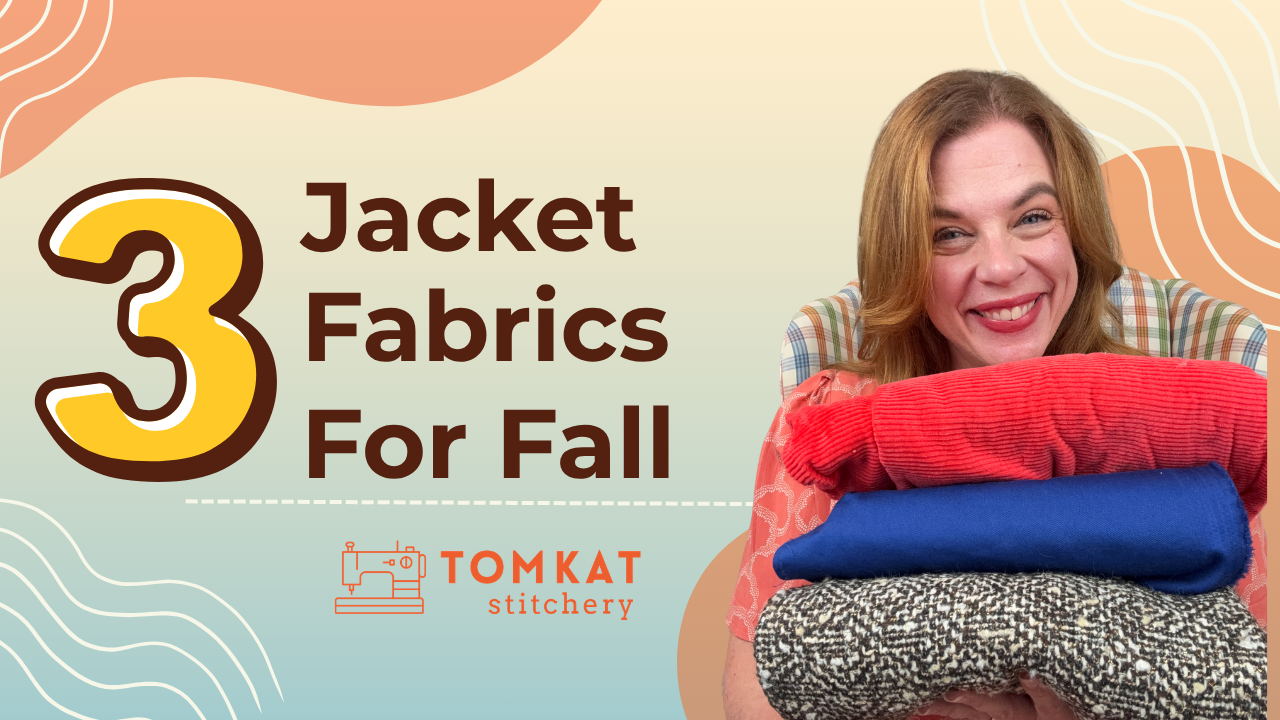
My three favorite fabrics for these kinds of fall jackets are cotton twill, corduroy, and bouclé. Each one brings a different combination of structure, texture, warmth, and personality to a jacket. The right choice depends on the silhouette you want and how you plan to wear it.
Read on or watch the video on YouTube to see each fabric and hear more about why I love using it for fall sewing.
Cotton Twill: My Favorite Fabric for a Lightweight Fall Jacket
If I had to choose just one fabric for sewing a lightweight fall jacket, I would probably pick cotton twill. It is durable, easy to wear, and structured enough to show off all the details that make a casual jacket special.
Twill refers to the fabric’s weave, while cotton refers to its fiber content. If you look closely at a twill fabric, you will usually see subtle diagonal lines running across its surface. Denim is one familiar example of a twill weave.
You can find twill made from other fibers, including rayon and lyocell. Those fibers create more drape than cotton, but the twill weave still gives the fabric more body than you would find in something like rayon challis. A rayon twill will be more fluid than a cotton twill, while still offering enough structure for certain jacket styles.
What jackets work best in cotton twill?
Cotton twill is a wonderful choice for jackets with utility-inspired details, including:
- Chore jackets
- Barn jackets
- Trench-style coats
- Bomber jackets
- Denim-style jackets
- Utility jackets with patch pockets
This fabric works especially well when you want topstitching, flat-felled seams, collars, or utility pockets to stand out. It has enough body to support those details without requiring the jacket to feel heavy or overly warm.
Cotton twill is also a hardworking fabric, which is one reason it is so well suited to chore and barn jackets. These are garments you may wear frequently, toss over all kinds of outfits, and expect to hold up through everyday life. Twill can handle that kind of use. Here are a couple of my favorite cotton twills:
Does a cotton twill jacket need to be lined?
One of the things I like most about cotton twill is that it can make a very successful unlined jacket. That makes it especially useful for an early fall layering piece rather than a true cold-weather coat.
An unlined cotton twill jacket can become the third piece that pulls an outfit together. If you are sewing a wardrobe module or capsule, it can work as the topper that coordinates with your tops and bottoms while adding a little structure. It is practical, comfortable, and available in just about every color you can imagine.
Corduroy: Fall Texture with Plenty of Personality
My second favorite fabric for fall jackets is corduroy. Like twill, corduroy is most commonly made from cotton, although you may also find it in other fiber blends.
Corduroy has raised ribs running along its surface. Those ribs are called wales. A wider wale creates a more casual look and usually gives the fabric more structure. A very fine wale can have more drape and a slightly dressier appearance.
That difference matters when you are matching corduroy to a jacket pattern. Wide-wale corduroy is a natural fit for a sturdy chore jacket, while fine-wale corduroy may work beautifully for a softer shacket or a design with a little more movement.
Which jacket styles can you sew in corduroy?
Depending on the width of the wale and the fabric’s weight, corduroy can work for:
- Chore and barn jackets
- Jean-style jackets
- Shackets
- Bomber jackets
- Moto jackets
- Jackets with statement sleeves
- Warm lined workwear jackets
You will also see corduroy used as an accent fabric, especially on the collar of a barn jacket. It is a simple way to add color and texture without making the entire jacket from corduroy.
A heavier corduroy can also be paired with a Sherpa or shearling-style lining to create a warmer jacket. That combination has its roots in practical outdoor workwear, but it translates easily into a casual handmade wardrobe. Here are some of my favorite corduroy fabrics:
What should you know before sewing corduroy?
Corduroy has nap, which means the fabric can appear lighter or darker depending on which direction the raised surface is running. All your pattern pieces need to face the same direction when you cut them.
If you flip pieces around to save fabric, you may discover that one sleeve looks darker than the other or that the two sides of your jacket reflect light differently. A with-nap cutting layout may require a little more yardage, but it will give you a much more consistent finished garment.
You also want to avoid crushing the raised surface while pressing. I like to use plenty of steam and gently shape the fabric with my hands instead of pressing down firmly with the iron. Corduroy is generally stable and manageable to sew; it simply needs these few extra precautions.
Texture is one of the main reasons I love corduroy for fall. Even in a solid color, it has so much visual interest. It gives a simple jacket more personality without requiring a print or a complicated design.
Bouclé: A Sophisticated Jacket Fabric with Warmth
My third choice is bouclé, especially wool bouclé. Bouclé fabrics have a textured surface created by looped or irregular yarns. The weave can be somewhat loose, with little nubs and variations that give the fabric its distinctive appearance.
Although wool is a traditional choice, you can also find cotton bouclé and bouclé made from rayon or blended fibers. The fiber content will affect the fabric’s warmth, weight, drape, and overall feel, so look beyond the word bouclé when deciding whether a particular fabric will work for your jacket.
Bouclé is often associated with classic Chanel-inspired jackets, so it naturally lends itself to polished and feminine designs. A short lady jacket that hits at the high hip is probably the first style most of us picture.
That kind of jacket can be a wonderful alternative to a cardigan. You can throw it over a tank top, sleeveless dress, or simple knit top when you need another layer. It adds warmth while making the entire outfit feel a little more finished.
Can bouclé work for a casual jacket?
Bouclé does not have to become a traditional lady jacket. I love the idea of using a fabric that feels sophisticated in a much more casual silhouette.
A bouclé bomber jacket or oversized zip-up jacket creates an interesting contrast. You are taking a fabric we associate with tailored suits and pairing it with a sporty, relaxed shape. That juxtaposition can make the finished jacket feel modern and unexpected.
Depending on the particular bouclé, you could use it for:
- Lady jackets
- Cropped collarless jackets
- Longer cardigan-style jackets
- Bomber jackets
- Oversized zip-up jackets
- Light coats
Bouclé will generally offer more warmth than cotton twill or an unlined corduroy, particularly when it contains wool. That makes it a nice option as you move further into the fall season. Check out these pretty boucles:
- This colorful collection
- This classic black and white coating
- A year around pink and raspberry weave
Does a bouclé jacket need a lining?
Bouclé does not always have to be lined, but lining or interlining can make the jacket easier to wear over other clothing. Its textured surface and looser weave may catch on sweaters or tops underneath it.
If the pattern is designed to be unlined, you can interline the pieces instead. To do that, cut the outerwear pattern pieces from a slippery lining fabric as well as the bouclé. Place each lining piece behind its matching bouclé piece and treat the two layers as one during construction.
This keeps the basic construction of an unlined jacket while giving the inside a smoother surface. It is especially helpful in the sleeves, where a textured fabric can make the jacket more difficult to pull on over a sweater.
Whether you choose a full lining, an interlining, or leave the jacket unlined will depend on the bouclé, the pattern, and how you intend to wear the finished garment.
How to Choose the Best Fabric for Your Fall Jacket
When you are deciding among these three fabrics, start with the look and wardrobe role you want from your jacket.
Choose cotton twill when you want a durable, structured, everyday jacket with crisp details and visible topstitching. It is my favorite option for chore jackets, utility jackets, and other lightweight outer layers that will get plenty of wear.
Choose corduroy when you want structure with more texture. Pay attention to the wale: wider wales tend to feel more casual and structured, while finer wales can have more drape and polish.
Choose bouclé when you want warmth, rich texture, or a more sophisticated finish. It is ideal for a classic lady jacket, but it can also be a lot of fun when paired with a casual bomber or oversized zip-up silhouette.
The fabric name alone does not tell you everything you need to know. Fiber content, weight, body, drape, and weave all influence how a fabric will behave. Thinking about those characteristics alongside the pattern’s design will help you choose a fabric that creates the jacket you are picturing.
Start Planning Your Fall Jacket
If you have cotton twill, corduroy, or bouclé waiting in your fabric stash, this may be the perfect time to pull it out and look through your jacket patterns. You might rediscover a chore jacket that would be wonderful in twill, a shacket that needs fine-wale corduroy, or a lady jacket pattern that finally gives your bouclé a purpose.
You do not necessarily have to begin sewing for fall today. Even planning the project now means you will be ready when the weather changes—and you will have a jacket you can actually wear when those first cool mornings arrive.
*This post may contain affiliate links. If you make a purchase through one of these links, I may earn a small commission at no additional cost to you. Thank you for supporting TomKat Stitchery!