Sewing for Disney: What I Made, Wore, and What Worked
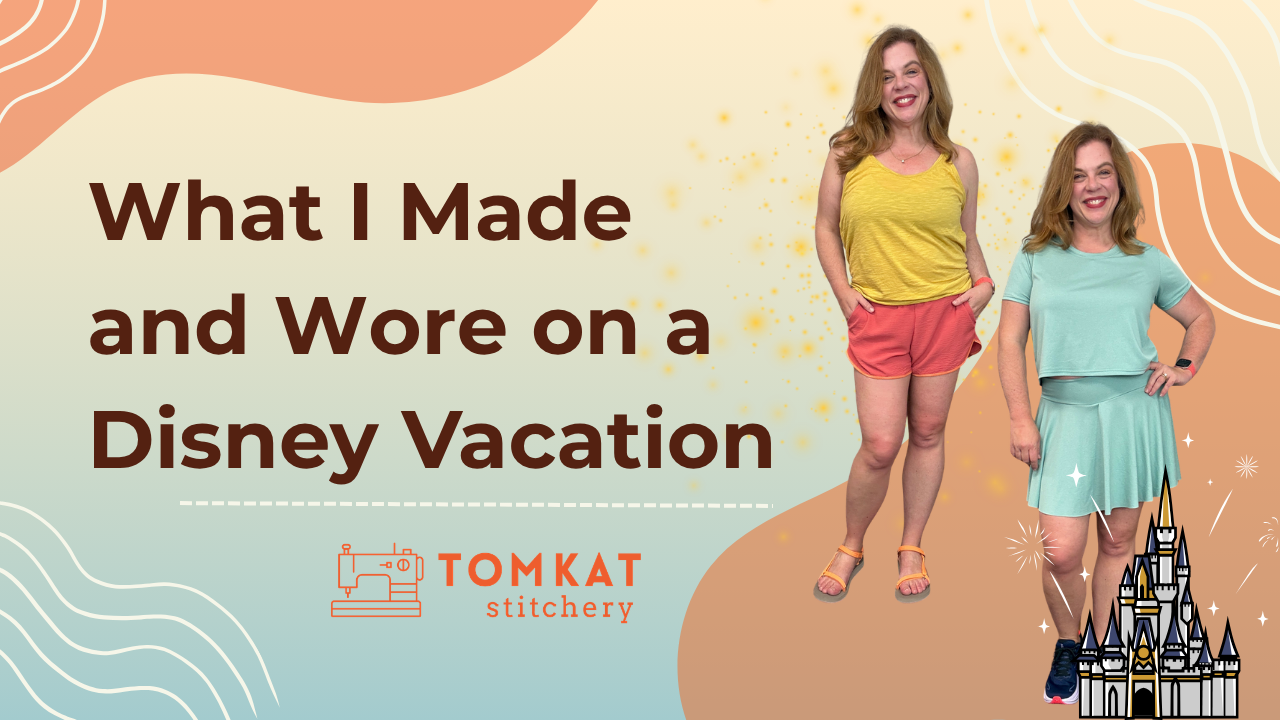
Before our family trip to Walt Disney World, I shared my plans for sewing a Disney vacation wardrobe. I wanted clothing that could handle August in Orlando: extreme heat, heavy humidity, afternoon rainstorms, long park days, and plenty of walking.
Now I’m back from Disney, every outfit has been thoroughly tested, and I can finally answer the question everyone asked: Did my handmade Disney wardrobe actually work?
The short answer is yes. Everything performed beautifully.
Read on for everything I made, how it wore in the parks, and what I would do differently next time—or watch the video on YouTube to see all the outfits.
My Disney Wardrobe Plan
We spent six days in the parks, typically arriving when they opened, returning to our hotel during the hottest part of the afternoon, and then heading back out for dinner and more park time.
I planned six separate daytime outfits because I knew I would not want to rewear anything after several hours in the Florida heat. For the evenings, I packed a few casual knit dresses that I could wear more than once.
This was not a minimalist travel capsule. My goal was to have enough comfortable options that I never felt stuck wearing something damp or uncomfortable. Disney is an expensive vacation, and I wanted my clothing to help me enjoy it.
All of the new patterns I used were from Greenstyle Patterns, and the activewear fabrics came from Surge Fabric Shop*.
What I Sewed for Disney
My original plan was to repeat a few reliable patterns and create something close to a uniform. Once I started sewing, though, I decided this was the perfect opportunity to try several Greenstyle patterns that had been waiting in my collection.
The Corset Dress Turned Top and Rally Skirt
My first outfit began as the Greenstyle Corset Dress. I shortened the bodice by one inch because I am 5'2" with a short torso and a high waist. That adjustment placed the waist correctly, but it also made the shortest dress length much too short for me.
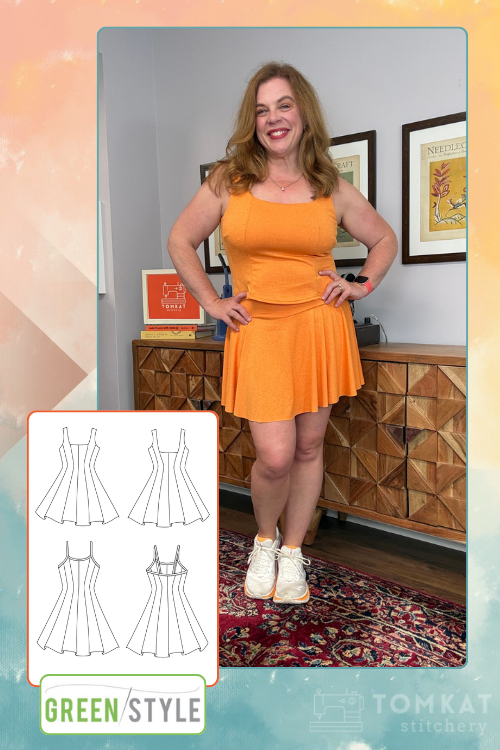
Rather than abandoning the project, I cut the dress into a top and paired it with the Greenstyle Rally Skirt. The top has a built-in bra and multiple cup-size options; I used the three-inch full-bust-adjustment piece.
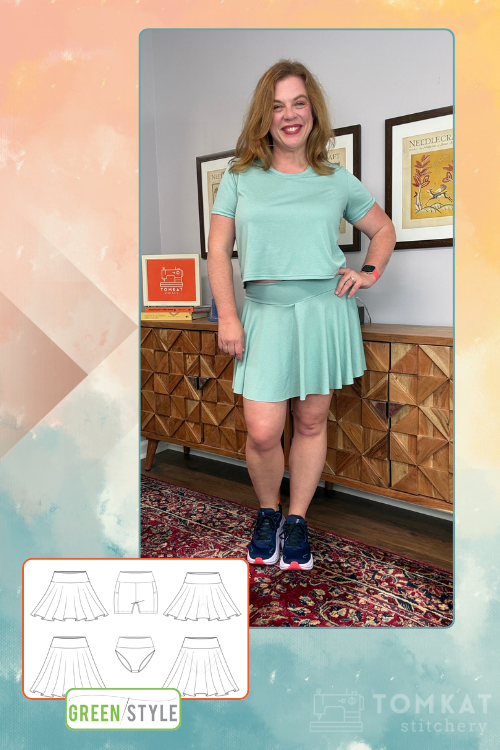
The Rally Skirt includes fitted shorts underneath, making it a wonderful choice for an active vacation. I made the full-circle version and left the skirt’s edge raw because athletic knit does not fray. The raw edge looked streamlined and saved me from wrestling a circle hem through my coverstitch machine.
Boxy Tees, Hazel Tank, and Auckland Shorts
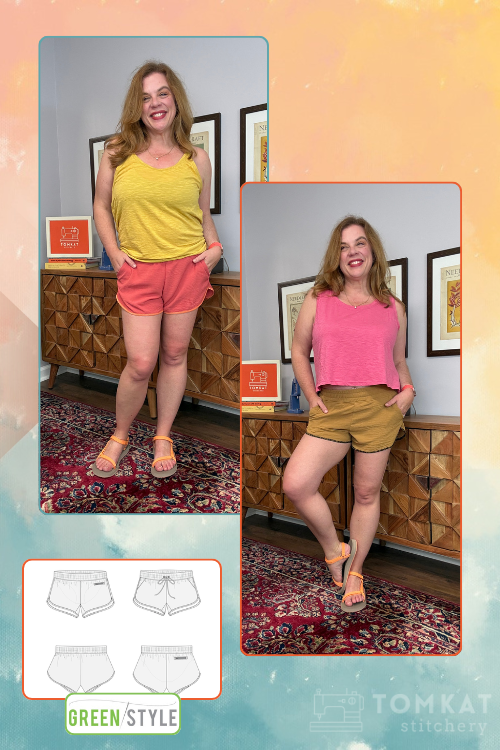
I made three pairs of Greenstyle Auckland Shorts in the longer length. Each pair has slash pockets and a lightweight brief liner made from leftover athletic knit.
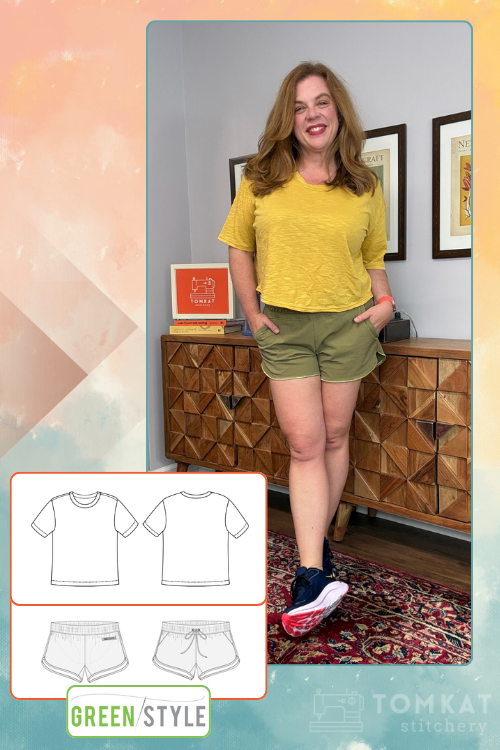
The stretch woven fabric was lightweight, wicking, and comfortable without being see-through. Because polyester does not always hold a pressed crease well, making the self-fabric binding called for in the pattern became frustrating. I replaced it with fold-over elastic in coordinating colors, including a very fun cheetah print. It was easier to sew and added a cute detail to each pair.
I paired the shorts with two Greenstyle Boxy Tees and a Hazel Tank. The tees were made from a lightweight cotton-modal knit with plenty of drape. I chose the middle cropped length, deeper scoop neckline, and short sleeves.
For the Hazel Tank, I used the split-back version that ties at the waist. The open back let me show off one of my handmade sports bras while still giving me a loose, breezy layer for the hottest part of the day.
The Bobby Brami and Rally Skirt
Another outfit combined the Greenstyle Bobby Brami with a three-quarter-circle Rally Skirt. I chose the longer brami length, a scoop front, a racer back, and the two-inch full-bust-adjustment option.
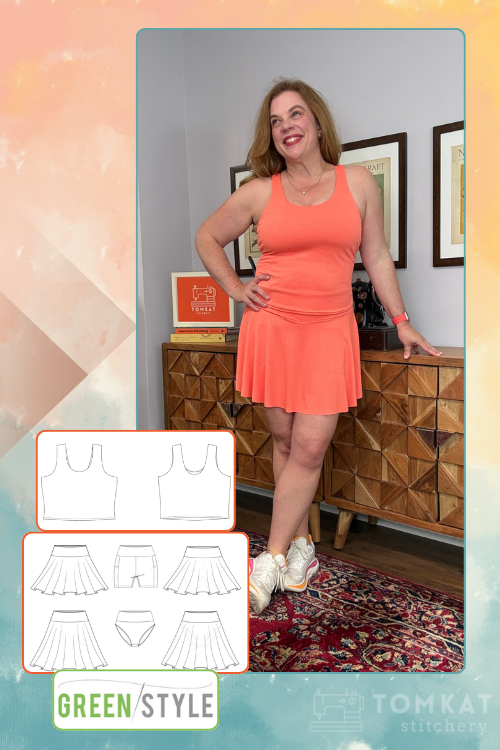
A three-inch adjustment might have been ideal for me, but the two-inch option still fit well and was comfortable. Because the Brami includes a built-in bra, I did not need another layer underneath it. Paired with the skirt, it created the look of an athletic dress while keeping the flexibility of two separate pieces.
The Leeward Tee, Tank, and Delphi Bra
For another Rally Skirt outfit, I made the cropped version of the Greenstyle Leeward Tee with the regular back. It was similar in function to the Boxy Tee but gave me a slightly different silhouette.
I also made a Leeward Tank with the pleated back as an extra top. It took up almost no room in my suitcase and gave me another option to pair with two older Rally Skirts already in my wardrobe.
Finally, I used scraps from several fabrics to make a color-blocked Greenstyle Delphi Sports Bra with a twist back. This was one of those deeply satisfying scrap-busting projects that made the entire collection feel coordinated.
How Did the Fabrics Perform in the Parks?
This was the real test, and the fabrics passed.
We experienced August heat, intense humidity, heavy rain, and water rides. We were damp for much of the trip simply because that is Orlando in the summer, but my clothing never felt as though it was holding moisture against my skin. Everything wicked well and dried quickly.
The lightweight athletic knit worked especially well for the Rally Skirts, undershorts, brief liners, and looser-fitting tops. At approximately 150 GSM, it was light enough to keep air moving and dry rapidly.
Would I use a 150 GSM knit for leggings worn on their own? No. For leggings, I generally prefer an athletic knit closer to 220–300 GSM for better coverage and support. The lighter fabric was also thinner than I would typically choose for a very fitted top, but it still performed well and kept me comfortable all day.
The stretch woven fabric used for the Auckland Shorts was another success. It had enough structure for the shorts, enough stretch for movement, and very little bulk. I would absolutely use it again for athletic shorts, hiking shorts, or another hot-weather travel wardrobe.
Were the Built-In Shorts and Liners Worth Making?
Absolutely. The Rally Skirts’ undershorts stayed in place and made it easy to walk, climb into ride vehicles, and move through the parks without worrying about the skirts.
I used an anti-chafing stick as an extra precaution because of the humidity, but I did not experience problems with the fabric trapping moisture or causing irritation. The brief liners in my Auckland Shorts also worked exactly as intended. At the end of the daytime park session, I could take off the entire outfit and place it directly into the laundry bag.
That small sewing decision made changing for the evening much easier.
What Would I Change Next Time?
There is very little I would change about the actual patterns or fabrics. I wore every garment I packed, felt comfortable in every outfit, and everything washed beautifully when we returned home.
The only clothing item that disappointed me was a purchased pair of supposedly wicking socks. When they became soaked in the rain, they held onto the moisture far longer than my handmade clothing. The athletic fabrics I selected performed much better.
I would also bring my Teva sandals again. They stayed securely on my feet, handled rain and water rides, and were perfect for riding Tiana’s Bayou Adventure—especially when we rode during the fireworks and managed to find a five-minute wait!
For our next Disney trip, I would love to take the sewing a step further and try Disneybounding. Instead of wearing a costume, Disneybounding uses colors and accessories to suggest a character. A yellow athletic skirt, navy top, and red headband could create a subtle Snow White look, for example. It would be a fun way to coordinate our family’s outfits while still dressing for the heat.
My Final Disney Sewing Verdict
I would remake every one of these patterns and use these types of fabrics again for extreme heat and humidity. The combination of lightweight wicking knits, stretch wovens, built-in shorts, and supportive tops gave me exactly the comfort and flexibility I hoped for.
Most importantly, these clothes allowed me to enjoy the trip without constantly thinking about what I was wearing. They handled rain, sweat, water rides, long days, and repeated washing—and they were cute enough that I felt good in all our vacation photos.
That is exactly what a successful handmade travel wardrobe should do.
*This post contains affiliate links. If you purchase through one of these links, I may earn a small commission at no additional cost to you. Thank you for supporting TomKat Stitchery!