Closet Core Frank Jeans Review: Two Styles & Fit Tips
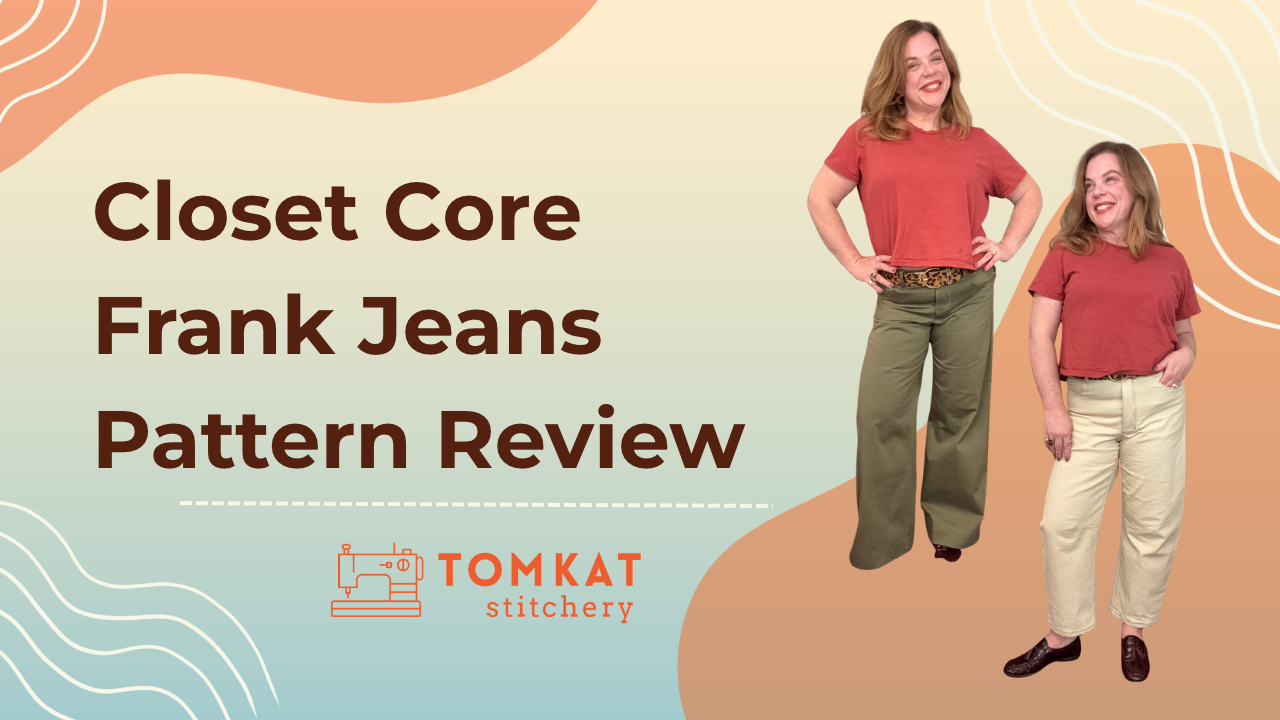
It's been a little while since I've sewn a pair of jeans, but I recently made not one, but TWO pairs of the Closet Core Frank Jeans, and I am thrilled with how they turned out!
These jeans are part of my fall capsule wardrobe, and I wanted to experiment with two different silhouettes, two rises, and two fabrics. I made a high-rise barrel-leg pair in stretch denim and a mid-rise wide-leg pair in cotton twill.
I'm sharing my thoughts on the pattern, the fitting adjustments I made without sewing a muslin, and a few construction details that made these jeans special.
The Closet Core Frank Jeans Pattern
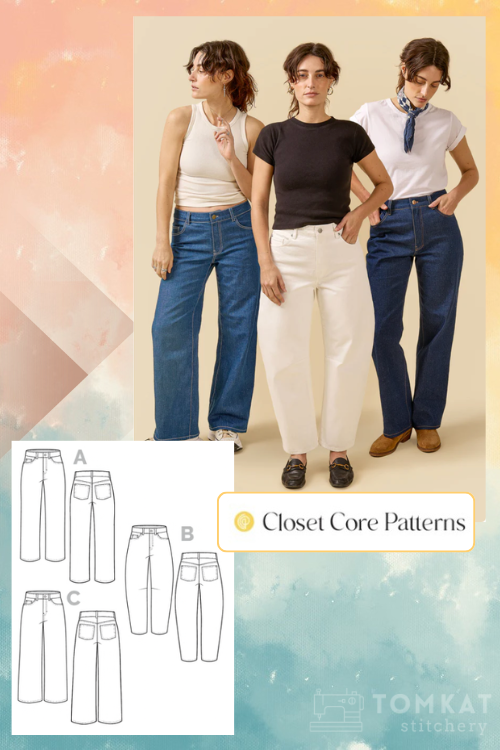
One of my favorite things about the Frank Jeans pattern is that it's a choose-your-own-adventure sewing project!
The pattern includes:
-
Three leg styles: barrel, wide, and straight
-
Two rise options: high-rise and mid-rise
-
Traditional front pockets and a coin pocket
-
Back patch pockets and a back yoke
-
Zip fly closure
-
Classic jeans construction and topstitching details
You can mix and match the rise and leg styles to create jeans that work for your wardrobe and personal style.
I've been a member of the Closet Core Club for about a year, and I've really enjoyed their patterns. Their drafting is excellent, and their instructions are fantastic.
I do need to make a few more fitting adjustments to Closet Core patterns than I do with some other companies. However, now that I understand what adjustments my body needs, I can make those changes before cutting my fabric.
In fact, I didn't sew a muslin for either pair of these jeans!
My First Pair: High-Rise Barrel-Leg Jeans
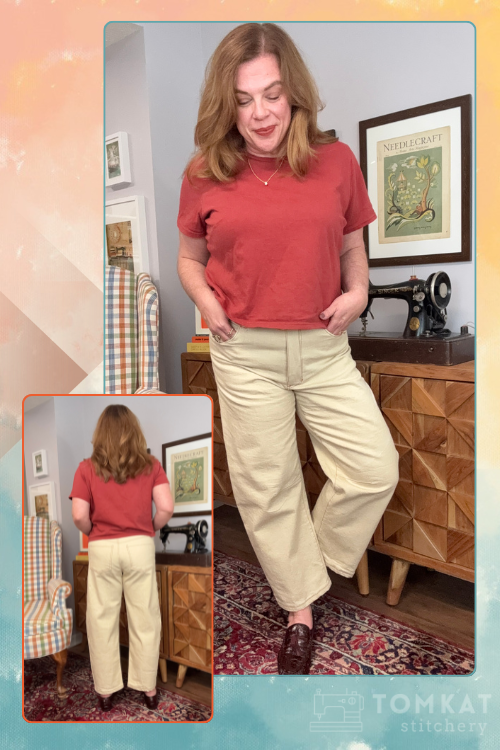
For my first pair, I chose the high-rise barrel-leg version using Beige Stretch Denim from University of Sewing.
The barrel-leg silhouette has a distinctive curved shape, with fullness through the leg that tapers toward the ankle. There's also a dart near the inside knee that helps create that shape.
I absolutely love how these turned out!
How Do You Adjust the Length of Barrel-Leg Jeans?
I'm only 5'2", while Closet Core drafts for approximately 5'6". Interestingly, most of my height is in my legs because I have a very short torso.
For these jeans, I shortened the pattern by two inches, but I didn't simply remove those inches from the hem.
Instead, I shortened one inch above the knee and one inch below the knee. This kept the knee dart positioned correctly and preserved the intended barrel shape.
That's important when sewing pants with shaped legs. Removing all the length at the hem can change the proportions of the design.
I also added topstitching along the inside knee dart for a little extra detail.
Contrasting Topstitching for a Classic Denim Look
For this pair, I wanted traditional jeans-style topstitching, so I chose a beautiful copper-colored Gutermann Mara 30 thread.
I sewed the jeans on my industrial machine and used my Bernina 790 for the topstitching. Having two machines set up made the process especially enjoyable because I didn't have to keep switching threads.
I haven't added the rivets yet because I'm waiting for the correct hardware for my press. Fortunately, that's something I can easily add later!
My Second Pair: Mid-Rise Wide-Leg Jeans
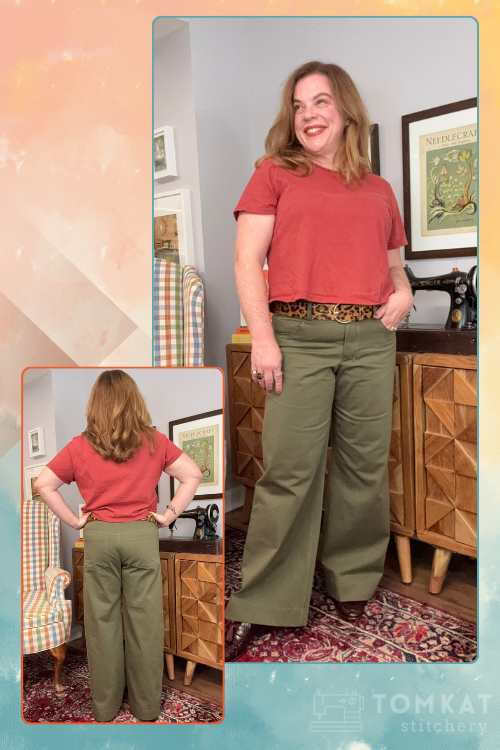
For my second pair, I chose the mid-rise wide-leg version using this gorgeous Olive Cotton Twill from University of Sewing.
This heavyweight, non-stretch cotton twill is perfect for the pattern. Although denim is technically a type of twill, this fabric gives the jeans a slightly different appearance.
I wanted these to feel a little more like trousers while still having traditional jeans details.
I also wanted to experiment with the mid-rise option. Because my torso is short, I think a mid-rise can sometimes make my proportions look more balanced. On the other hand, I love the secure feeling of a high-rise waistband.
So, naturally, I made both!
Creating a More Tailored Finish
For the olive pair, I made a few construction choices to give them a more trouser-like appearance.
Rather than using contrasting topstitching, I matched the thread to the fabric for a subtle finish.
I also changed the hem construction. Instead of making a traditional jeans hem, I serged the raw edge, turned it under two inches, and topstitched it in place.
That deeper hem adds weight to the bottom of the wide legs and creates a beautiful finish.
⭐Fabric shopping tip: Both fabrics came from University of Sewing. Use code TOMKAT for 15% off regularly priced fabrics, excluding sale and clearance items.
How I Adjusted the Frank Jeans Pattern for My Body
One of the biggest advantages of understanding pattern fitting is knowing which alterations you need before you start sewing.
For Closet Core bottoms, I've learned there are three adjustments I consistently need.
1. Shortening the Rise
I shortened both the front and back rise by 3/8 inch.
Closet Core tends to draft a slightly longer rise than I need, so this adjustment helps the crotch sit properly on my body.
2. Making a Full Seat Adjustment
I made a 3/8-inch full seat adjustment by scooping out the back crotch curve.
The Frank Jeans are designed with a fairly cheeky fit, so I wanted to preserve that intended silhouette while giving myself the additional room I need.
3. Adding Room at the Waist
My waist measures larger than my hips in the Closet Core size chart. I selected a size 10 based on my hips, although my measurements fall between a 10 and a 12.
Rather than grading between sizes, I straightened the side seam through the waist area.
I added 1/2 inch at the top of each side seam, tapering to nothing around mid-hip. I also adjusted the front pocket pieces, pocket facings, and back yoke so everything matched.
These changes added two inches around the waist, which I incorporated into the waistband.
The result accommodated my straighter waist-to-hip proportions without changing the fit through the hips.
Does Stretch Denim Change How You Fit Jeans?
Absolutely!
For the beige stretch denim, I used my usual pattern alterations and sewed the jeans with the recommended 5/8-inch seam allowances.
The fabric has enough give that I can sit and move comfortably, even though my hip measurement falls between sizes.
For the non-stretch olive twill, I needed more room.
I sewed the side seams at 3/8 inch instead of 5/8 inch. That gave me an additional inch around the body, which made all the difference in comfort.
This is why fabric selection matters so much when sewing pants. Even with the same pattern, the amount of stretch in your fabric can affect the finished fit.
A Simple Trick to Keep Your Jeans Waistband from Stretching
Here's another construction detail I added to both pairs.
I stitched cotton twill tape into the upper seam allowance of the waistband to stabilize it.
Because my waist and hips are relatively straight, I don't have a pronounced hip curve to help keep my pants in place. If the waistband stretches during wear, I end up constantly pulling my pants back up.
And that's annoying!
The twill tape helps prevent stretching and keeps everything sitting where it belongs.
It's a simple addition that can make a real difference in how comfortable your finished jeans are to wear.
Want to Learn How to Fit Your Own Sewing Patterns?
One reason I enjoyed sewing these jeans so much is that I already understood what adjustments I needed.
That's exactly what I teach in my Pattern Fitting 101 course.
The course is available on demand, so you can enroll anytime and work through the lessons at your own pace. It covers more than 40 pattern alterations to help you adjust sewing patterns for your unique body.
While my Pattern Fitting 101 student community was recently open, several students were also sewing the Frank Jeans. It was fun seeing this pattern on different body shapes and helping everyone achieve a great fit!
Once you understand how to fit patterns to your body, sewing becomes so much more enjoyable because you end up making clothes you actually want to wear.
Will I Make the Frank Jeans Again?
Absolutely!
I've now sewn two of the three leg styles, and I have a beautiful piece of acid-wash denim gifted to me by Fabric and Flow.
I'm thinking it might be perfect for a straight-leg pair for winter.
The big question is whether I should make the high-rise or mid-rise version!
I'd love to hear what you think. Do you prefer the high-rise barrel-leg jeans or the mid-rise wide-leg version? And which rise should I choose for my next pair?
Overall, I highly recommend the Closet Core Frank Jeans. The drafting is excellent, the instructions are thorough, and the variety of styles makes this a pattern I can see myself using again and again.
*Affiliate links included—thank you for supporting my work! No extra cost to you, but I may earn a commission. Offers may change.