Jenni’s Double Gauze Closet Core Elodie Dress
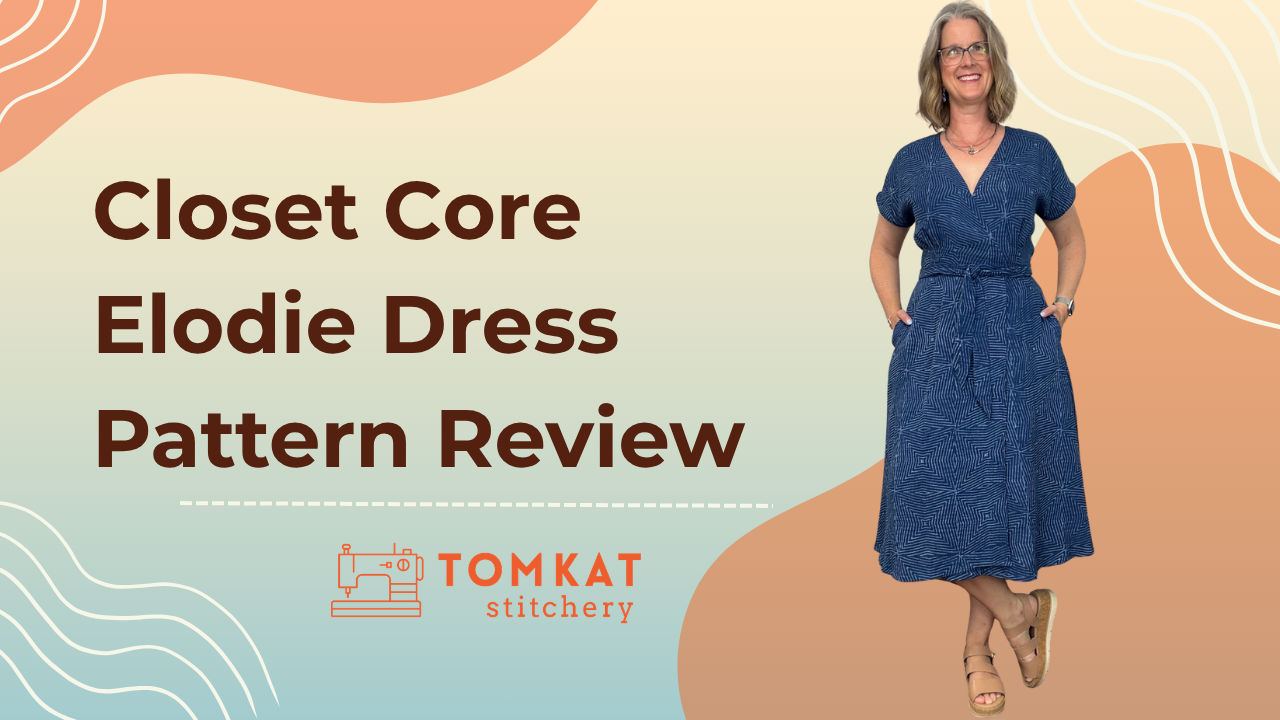
Some sewing projects begin with a carefully developed plan. Others begin when the temperature reaches 100 degrees, wildfire smoke makes it unpleasant to be outside, and spending the entire weekend in the sewing room suddenly sounds like the perfect idea.
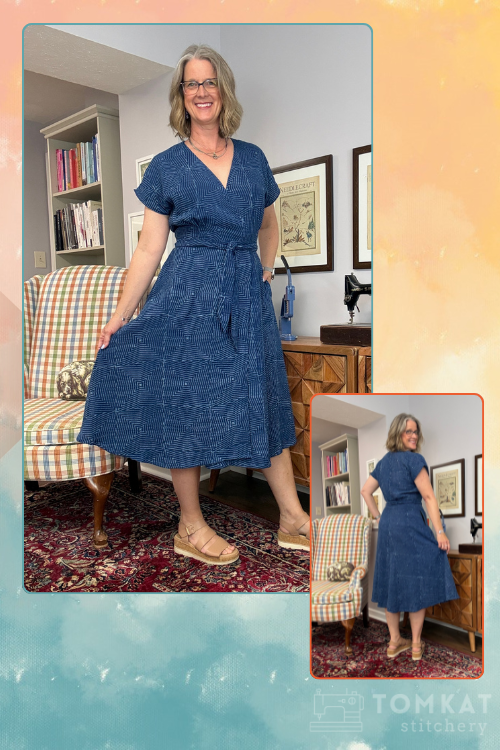
That is how Jenni finally turned a beautiful piece of Indian block print double gauze into a new Closet Core Elodie Wrap Dress. She already knew she loved this pattern, but changing the fabric gave her a completely different dress—one that is light, casual, comfortable, and perfect for the hot days we still have ahead of us.
Read on or watch the video on YouTube to see both versions of Jenni’s Elodie and hear us talk about how fabric can completely transform a familiar pattern.
Returning to an Old Favorite
The Elodie Wrap Dress is not a new pattern, and it is not even new to Jenni’s wardrobe. I made her first Elodie about five or six years ago. We featured that dress in an older video comparing the same pattern on our two different body shapes.
Jenni’s original Elodie was made in a cotton sateen border print. I spent quite a bit of time positioning that border, especially down the back of the dress, and it created such a beautiful result. She still receives compliments every time she wears it. The fabric gives the dress a polished look that works beautifully for special occasions, and it has become one of those timeless pieces that continues to earn its place in her wardrobe.
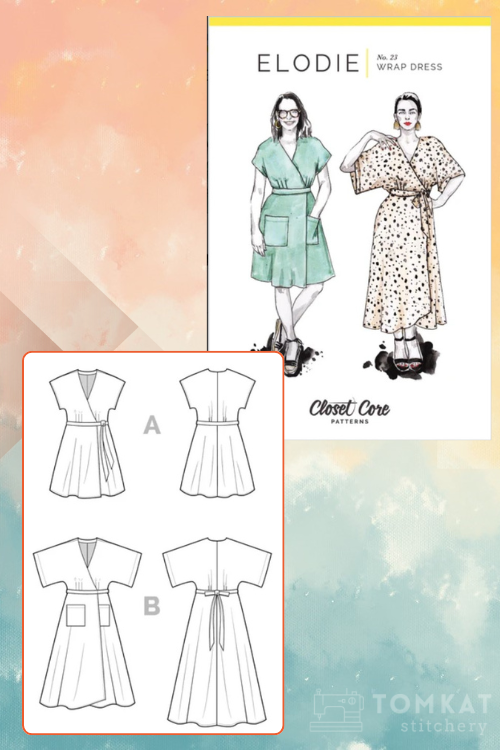
I have made the Elodie three times—two versions for myself and Jenni’s original dress. I completed a full bust adjustment for my version. Jenni’s was made in a size 10 with one inch added at the waist because she is long-waisted. That is a fairly standard adjustment for her across many pattern companies.
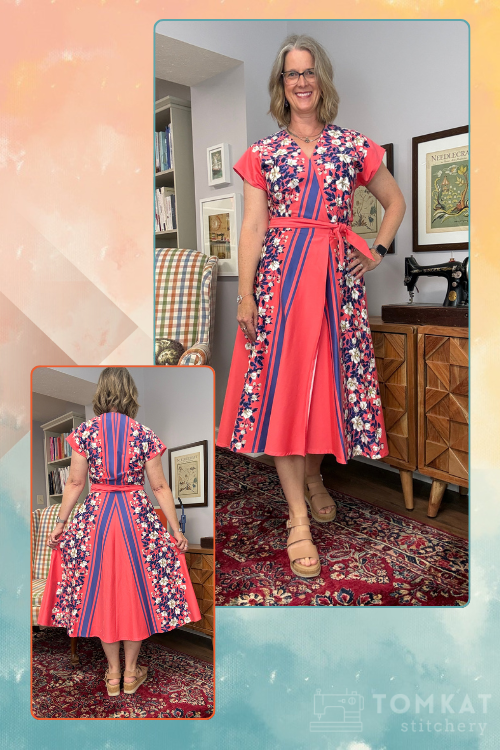
Best of all, I had saved those adjusted pattern pieces. The envelope was even labeled “Jenni’s dress” in my pattern cabinet. She could use a pattern that we already knew fit without printing, taping, cutting, or repeating the adjustments.
Finding the Fabric
The story of Jenni’s new Elodie began in May at the Fiber and Fabric Festival outside Chicago, where I was teaching classes. The event also included a consumer show with sewing machines, yarn, notions, and fabric vendors.
Jenni does not typically purchase much fabric at shows because she likes supporting the fabric stores in our local area. If she is going to bring something home, it needs to feel special or different from what she can usually find nearby.
Indian block print fabric easily meets that requirement. Jenni is an absolute sucker for it and already has several block print garments that stay in heavy rotation throughout the summer.
While walking through the show, we found Holistic Needlecraft, a vendor based in London, Ontario. Their booth included a beautiful selection of Indian block prints, and Jenni was interested almost immediately. She eventually chose an indigo block print double gauze, even though she did not yet know what she would make.
How much fabric should you buy without a pattern in mind?
This fabric was fairly narrow, so yardage was an important consideration. I suggested that Jenni buy approximately four yards if she thought she might eventually make a dress. That would give her enough flexibility to choose a pattern later without discovering that she was short on fabric.
The double gauze sat on her sewing table after we returned home. Once the weather became oppressively hot, Jenni knew it needed to become something light and comfortable. She had recently worn her original Elodie and began wondering why she could not make the same dress in a much more casual fabric.
Jenni loves wearing wrap dresses, and the Elodie has no zipper, buttons, or other closures. It seemed like exactly the kind of straightforward project she wanted for a weekend indoors.
Sewing Double Gauze
Double gauze is made from two very lightweight layers of gauze that are connected at small intervals. It is soft, breathable, and wonderfully airy, but its loose weave also means it can shift and distort while you are cutting it.
Jenni first tried laying the fabric on a table and holding everything in place with a magnetic cutting mat. Even with the magnets, she could see how easily the layers were moving.
Eventually, she laid the fabric completely flat on my basement floor and carefully moved the cutting mat underneath each section as she worked. The floor gave her enough space to support the full length of fabric without allowing the excess to hang over an edge and pull it out of shape.
Were all of her pattern pieces perfectly even? No. This fabric still moved a little despite her precautions. Everything was close enough to work, though, and the finished dress came together beautifully.
Jenni cut the dress on Friday afternoon, sewed the bodice that evening, and finished the project on Sunday. For her, it was a relatively quick sew—and one she completed almost entirely on her own.
Jenni’s First Pocket Pattern Hack
The Elodie pattern includes patch pockets, but Jenni was concerned about adding them to such a lightweight fabric. A phone or another heavy object could cause a patch pocket to sag, distort the dress, or pull on the front of the wrap.
Instead, she completed her first real pattern hack.
Jenni pulled out the Seamwork Hill Dress pattern*, which has inseam pockets that are also secured into the waist seam. This is one of my favorite pocket constructions for dresses because the waistband supports the pocket rather than allowing its full weight to hang from the side seam.
She borrowed that pocket piece and added it to the Elodie. The top of each pocket is caught securely in the waist, making it much more practical for this lightweight dress.
Can you use a different fabric for inseam pockets?
Because the double gauze has such a loose, shifting weave, Jenni did not use it for the pocket bags. Instead, she chose a solid cotton from her stash—probably a poplin or lawn. The pocket fabric is stable enough to support anything she puts inside, and it cannot be seen from the outside of the dress.
Using a different pocketing fabric is a simple solution when your main fabric is delicate, bulky, unstable, or too precious to hide inside the garment. It also made sewing the pockets much easier than it would have been with another layer of gauze.
Making a Wrap Dress Feel More Secure
The loose weave gives this Elodie its wonderful softness, but it also allows the dress to shift slightly as Jenni moves. During her first test wear at home, she discovered that she needed a little more security at the neckline.
We added a small clear snap where the bodice crosses. It holds the layers together without changing the look of the dress. Jenni will probably add another snap a little lower on the bodice and possibly one near the waistband to keep the wrap positioned exactly where she wants it.
I add clear snaps or clear elastic to many of my wrap dresses, regardless of the pattern. It is an easy adjustment that can make a wrap neckline much more comfortable to wear throughout the day.
If Jenni made this version again, she might consider going up a size to give herself a little more overlap. She is very happy with the fit, however, and wanted to use the pattern pieces that already included her long-waisted adjustment.
The Same Pattern, Two Very Different Dresses
This project is such a good example of how dramatically fabric can change a sewing pattern.
Jenni’s cotton sateen Elodie feels polished and special. The sateen has enough body to emphasize the shape of the full skirt, while the border print makes the entire dress feel more formal.
The double-gauze Elodie is softer, more relaxed, and much more casual. The fabric has less structure and more movement, so the dress falls closer to her body. Jenni says it feels like she is wearing air. Other than the waistband tied around her waist, she can barely feel it.
I described it as “secret pajamas,” which is very accurate. It is incredibly comfortable in the heat, but Jenni could still wear it to a work event, a concert, dinner, or the grocery store.
The Elodie is designed to work in a variety of woven fabrics, and its appearance can change dramatically depending on the fabric choice. A structured cotton creates a very different result from a fluid rayon, silk, or lightweight gauze—even when every pattern piece is exactly the same.
Revisit the Patterns You Already Own
With so many new sewing patterns being released, it is easy to forget the good ones already sitting in our pattern stashes. We may have made a pattern once and mentally assigned it to a particular category: formal dress, work blouse, or casual pants.
But the first version does not have to define every version that follows.
Jenni thought of the Elodie as a polished dress because that was what I had originally made for her. Reimagining it in double gauze gave her a casual summer dress that fills a completely different role in her wardrobe.
Returning to an adjusted pattern also saved her time. The printing, taping, fitting, and alterations were already finished. She could move directly into choosing fabric and sewing—and even had enough confidence to create a pocket hack on her own.
Jenni’s new dress is a great reminder that an older pattern can still feel completely new when you pair it with a different fabric. Before buying your next pattern, take another look through the patterns you already own. There may be a forgotten gem waiting for the right fabric and a fresh perspective.