Sewing with Leather: Pattern Hacks for a Leather Mini Skirt
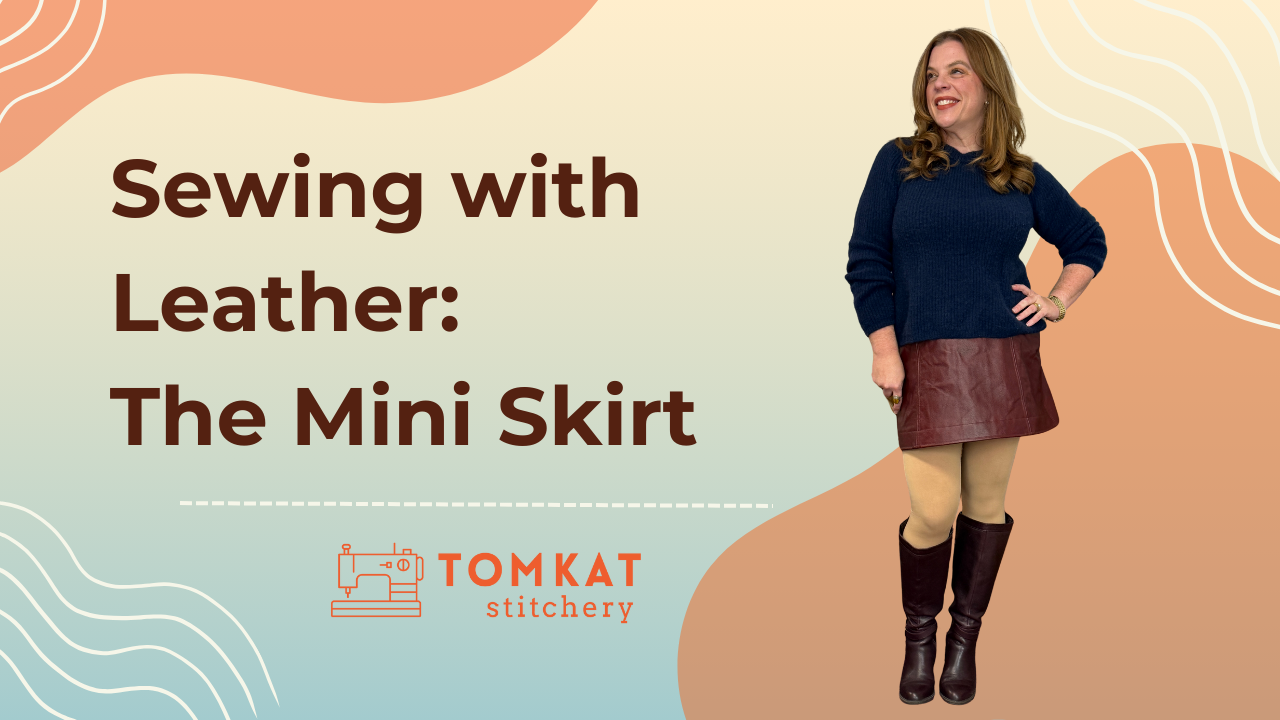
Today I’m sharing the story behind my sister’s Christmas leather mini skirt—how it came to be, why I chose this particular pattern, how I adapted it for leather, and all the practical tips I learned along the way. If sewing with leather feels intimidating, I promise: it’s far less scary than it seems, especially when you start with the right pattern and a few smart adjustments.
This skirt was designed to pair perfectly with a velvet top for holiday events, dinners, and all the festive moments we’ll be sharing together this Christmas season. And yes… I may have convinced myself I need one too. Read on or watch here:
The Backstory: From Velvet Top to Leather Mini
My sister and I were chatting about Christmas outfits—what we’d wear to dinners, events, and gatherings since we’ll be together for about ten days over the holidays. She mentioned a gorgeous velvet top she’d picked up and how she was trying to style it.
One inspiration photo showed it paired with a black mini skirt… and that’s where things stalled.
Neither of us wears black. We both have had our colors done by Color Guru. (Grab your colors for 10% off using code TOMKATCOLOR) She’s a Sunlit Summer (the warmest of the Summer palettes), and I’m a Copper Spring, so black just isn’t our friend. Gray? Sure. Soft, warm tones? Absolutely. But black felt wrong.
Then it clicked.
Years ago, I bought several upholstery leather hides when a furniture store closed—one for me, one for my mom, and one for my sister. Hers was a stunning oxblood color… and it had been sitting unused ever since. That hide was suddenly the perfect solution.
Choosing the Pattern: Why the Seamwork Orla Skirt Worked
For this project, I used the Seamwork Orla Skirt*, and it turned out to be an ideal choice for leather.
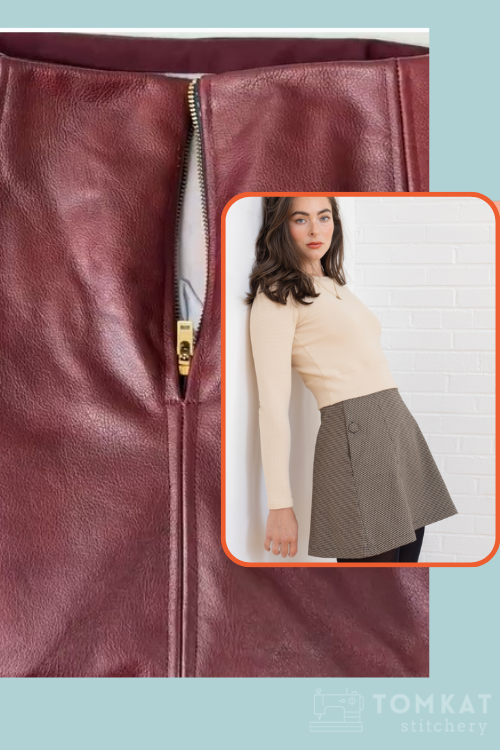
Here’s why:
- A-line silhouette → perfect for a mini skirt with a retro feel
- Panel construction → great for working with leather hides
- Faced waistband → less bulk than a traditional waistband
- Fully lined → comfortable and polished
Leather doesn’t have a grainline, which means you can nest pattern pieces creatively and get the most out of every hide. The Orla skirt’s paneling made it easy to work around the natural shape of the leather without wasting material.
I also had the benefit of a “wearable muslin”—Jenni had already made the midi version (Click HERE to see it) , which helped me confirm sizing before cutting into leather
Pattern Hacks for Sewing with Leather
Because this leather was originally intended for upholstery, I made several intentional adjustments to keep the skirt wearable—and sewable.
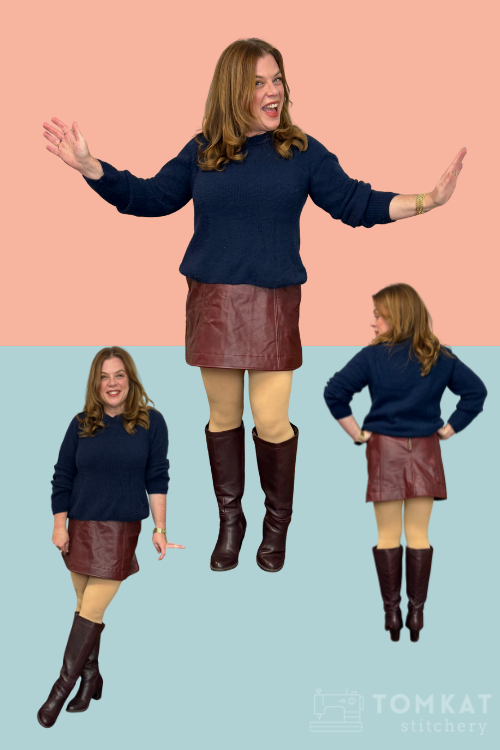
What I Changed:
- Omitted the pockets (less bulk, fewer layers)
- Shortened the skirt by 1 inch before cutting
- Deepened the hem to 2 inches for balance and weight
- Swapped the invisible zipper for an exposed metal jean zipper
- Used a locking zipper so no hook-and-eye was needed
Once you stitch leather, those holes are permanent—so every choice matters. Simpler really is better here.
Sewing with Leather: Tools & Techniques That Help
If you’re nervous about sewing leather, this setup made all the difference:
My Leather Sewing Setup:
- Machine: Bernina 790 Pro
- Foot: Walking foot (my top choice for leather)
- Needle: Size 18 leather needle
- Thread: Regular all-purpose thread
- Stitch length: Increased to 3.0
- Bonus tool: Wooden mallet for flattening seams
Hammering thick areas—especially hems—made everything feed smoothly through the machine. I also added two rows of topstitching at the hem, which looks great on leather and helps it lie flat.
One thing I didn’t do? Topstitch the waistline. It was simply too thick, and once those holes are there, there’s no undoing them.
Why This Pattern Is Worth Repeating
This skirt was such a success that I already have plans for:
- A teal garment-weight leather version for myself
- A wool version with pockets
- Possibly more makes using up the rest of that oxblood hide
That’s the sign of a truly versatile pattern—when you immediately start planning the next one.😉
Final Thoughts: Leather Isn’t as Scary as It Seems
Whether you’re working with a full leather hide, repurposing a thrifted leather jacket, or just curious about trying something new, this project proves that leather can be approachable with the right pattern and mindset.
Start simple. Go slow. Make intentional choices.
*Affiliate links included—thank you for supporting my work! No extra cost to you, but I may earn a commission. Offers may change.