How Pattern Fitting Changed Jenni’s Sewing Journey
Learning to sew a garment is one skill. Learning how to make that garment fit your body is another—and that second skill can completely change how you feel about sewing.
Jenni has been working with me at TomKat Stitchery since 2022, but her sewing experience looks very different from mine. She is a hobby sewist who tries to complete about one project each month. Her journey from sewing straight-line home décor projects to confidently adjusting garment patterns is a wonderful example of what happens when you stop assuming your body is the problem and start learning how to change the pattern.
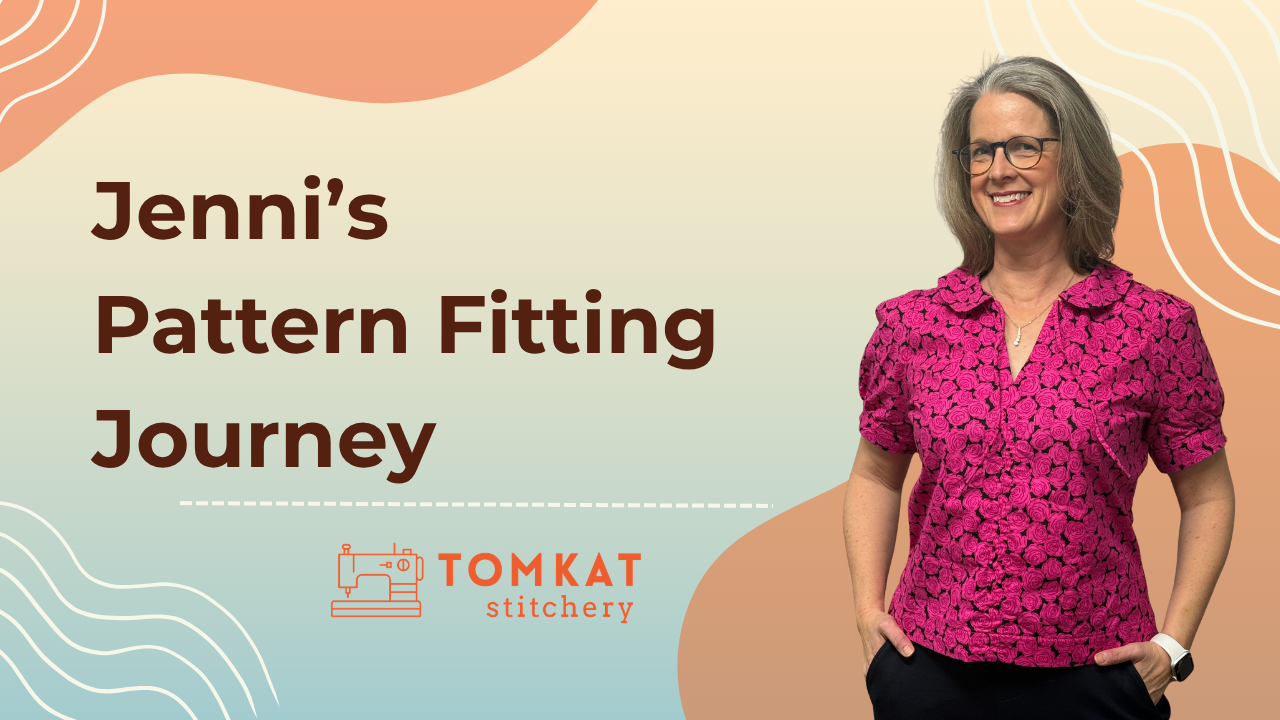
Read on or watch the video on YouTube to follow Jenni’s sewing and fitting journey, including the projects that disappointed her, the adjustments she now makes and the confidence she has gained along the way.
From Straight Lines to Garment Sewing
Jenni grew up in a creative and resourceful family. She watched her mother and grandmother sew and learned some sewing basics from them and through 4-H. As an adult, she continued to sew curtains, bedding and other projects that mostly involved straight lines.
Then she started working with me.
At that point, she could no longer simply ask me to sew something for her. She had to learn how to do it herself! In many ways, Jenni’s experience helped inspire our Introduction to Garment Sewing course. I wanted to show her—and anyone else who felt intimidated by garment sewing—that she could learn these skills one step at a time.
Fabric was a big part of the appeal for her. When you walk into a fabric store, you are not limited to the few colors or prints available in ready-to-wear clothing. You can find something completely unique and imagine what it might become.
For Jenni, transforming those special fabrics into one-of-a-kind clothing was the real reason she wanted to sew.
When a Beautiful Garment Still Doesn’t Feel Right
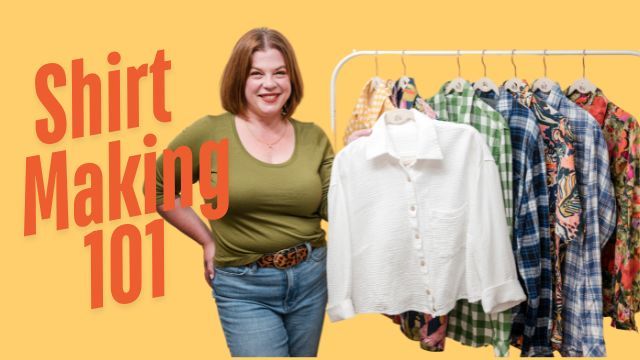
One of Jenni’s early lessons came from a button-up shirt* I made for her during Shirt Making 101. She liked the shirt and loved the yarn-dyed cotton fabric, but it always felt as though it were falling backward off her shoulders.
That uncomfortable feeling was a clue that she needed a forward shoulder adjustment. The sleeves also felt too short, and the shirt did not stay tucked in because she needed additional length through the body.
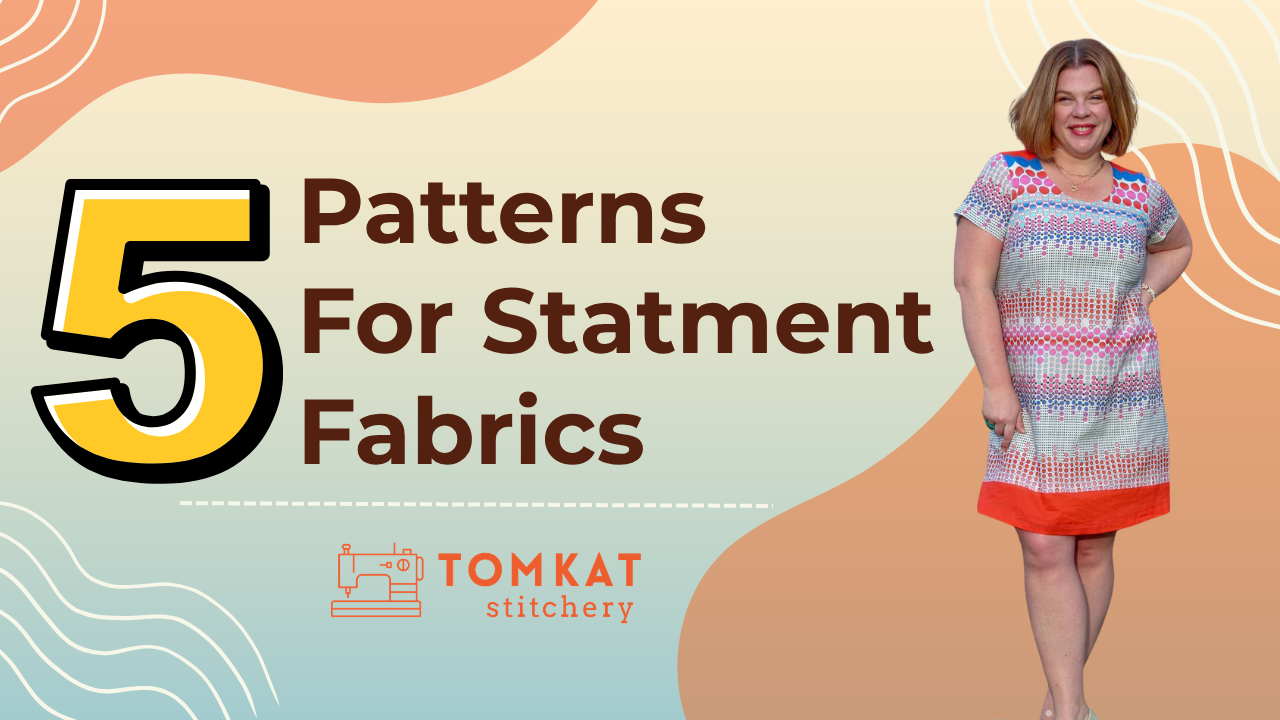
She had a similar experience when she made a dress* from a beautiful rayon border-print fabric. The finished dress looked lovely, but the elastic waist sat too high and made the dress feel as though it had an empire waistline.
The fabric was beautiful. The sewing was successful. But the garment did not fit the way she had pictured it.
That is an important distinction. A project does not have to be poorly sewn to feel disappointing. If the waist, shoulders or proportions do not match your body, you may still find yourself tugging at the garment or leaving it in the closet.
How Do You Know Which Pattern Adjustments You Need?
Most sewists do not need every fitting adjustment available. The goal is to identify the small group of adjustments that consistently applies to your body.
As Jenni helped me work on Pattern Fitting 101, she began recognizing the fit patterns she had experienced throughout her life. Dresses frequently hit above her natural waist. Sleeves and bodices were often too short. Garments could be too large through the shoulders while still needing additional room through the hips.
She even looked back at her wedding photographs and realized that the dress she had always thought was empire-waisted probably was not. The waist seam simply sat too high on her long torso!
Jenni’s most common adjustments now include:
- Adding length through the bodice
- Lengthening sleeves
- Making a forward shoulder adjustment
- Selecting a smaller size through the shoulders and upper body
- Grading to a larger size through the waist or hips when needed
Once she recognized those recurring fit needs, pattern fitting stopped feeling like a foreign language. She did not have to start from zero with every new project.
Can You Use the Same Adjustments with Different Pattern Companies?
Your adjustments may not be identical for every pattern, but understanding your body gives you a much better starting point—even when you try a new pattern company.
Jenni learned this after making the Seamwork Hill dress*. Although she had attempted a few adjustments, the finished dress was still much too large through the upper body. That project helped us determine that she often needed to begin with a smaller size at the shoulders and then grade out through the hips according to the pattern’s size chart.
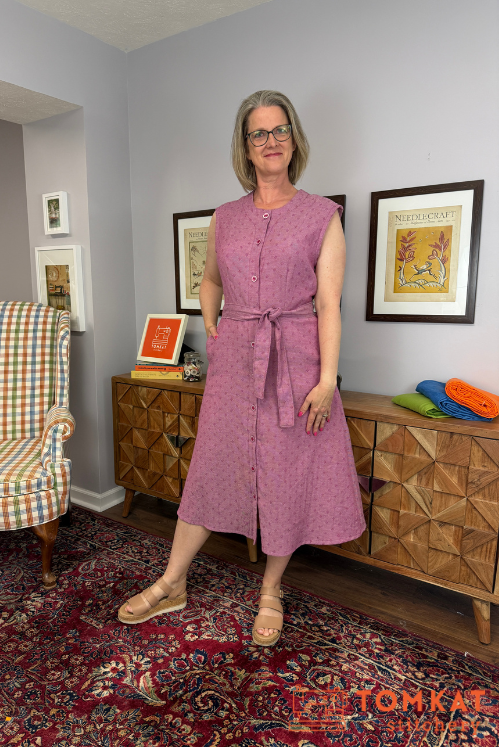
She carried that information into her Closet Core Elodie Dress. Even though it was one of her first Closet Core projects, she already knew to check the shoulder position, bodice length and sizing through the waist and hips.
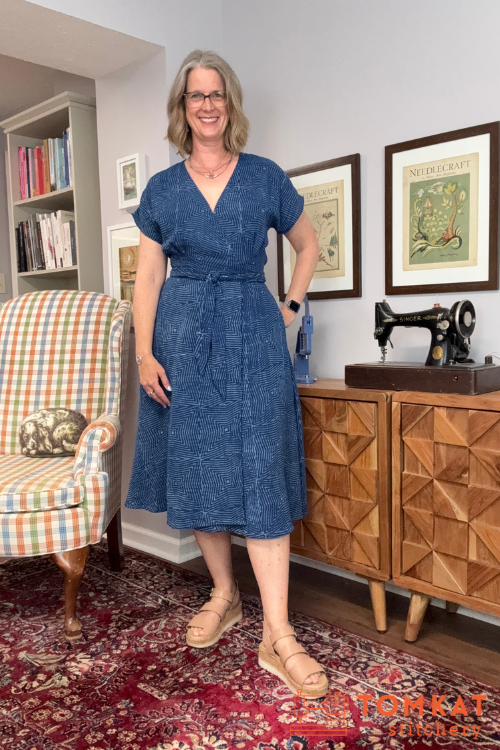
The result was a dress that fit beautifully.
Will she sometimes refine an adjustment after trying a new pattern company? Of course. But she is beginning with useful information instead of hoping a straight size will work.
Pattern fitting does not tie you to one company whose patterns happen to fit. It gives you the freedom to sew the patterns you really want to wear.
From Sewing Disappointments to Independent Success
One of Jenni’s biggest sewing wins was a Seamwork Romie blouse* made from fabric covered in roses for a trip to the Rose Bowl. (Click HERE for the full review) She selected the pattern, made her fitting adjustments and completed the blouse over a weekend without my help.
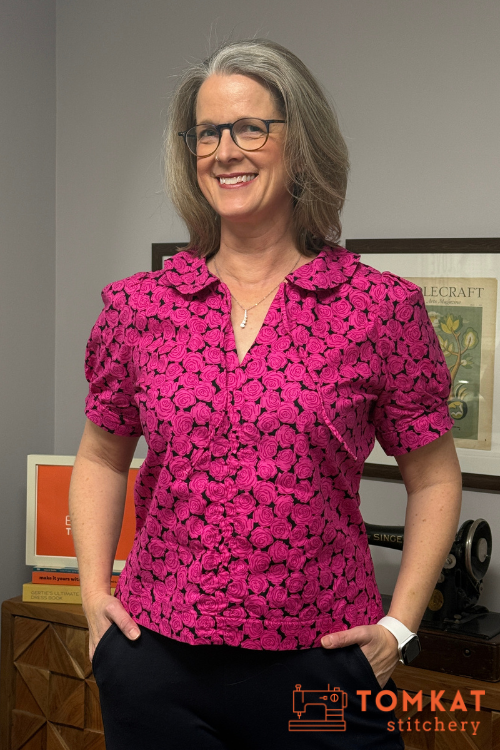
I do not think I even saw it while it was in progress!
The blouse turned out beautifully, and more importantly, it proved that she could take what she had learned and apply it independently. She was no longer just following instructions. She was making informed decisions about what her body needed.
That confidence has followed her into each new project. When she plans another button-up shirt, she already knows to consider a forward shoulder adjustment, extra sleeve and bodice length and possibly grading through the waist and hips.
Does Pattern Fitting Make Precious Fabric Less Intimidating?
Beautiful fabric can feel risky when you are uncertain about fit. If you have previously spent an entire weekend sewing a garment that ended with “Well, it’s okay,” cutting into an irreplaceable piece of fabric becomes much harder.
Jenni has a gorgeous Lady McElroy remnant waiting in our sewing space. There is no more available, so naturally, she has been nervous about cutting it. But now she knows which alterations she needs to make to her shirt pattern before that fabric ever meets the scissors.
That knowledge does not eliminate every possible sewing surprise, but it removes much of the guesswork.
It also gives her the freedom to lean into the kinds of projects she loves most. Jenni enjoys themed outfits, costumes and wonderfully specific fabrics—including the possibility of hunting online for fabric covered in tiny horses. If she spends hours finding exactly the right print, she wants the finished garment to be wearable.
Of course, she will still make an easy, floaty caftan when she wants one. Not every garment needs extensive fitting. But when the pattern, fabric and sewing time represent a real investment, knowing how to improve the fit makes that investment feel much safer.
The Problem Was Never Your Body
Pattern fitting changes more than the garments you sew. It can also change how you think about your body.
Jenni recently tried on a sheath dress in a store. It fit through the upper body but was too tight through the hips. In the past, she might have assumed that silhouette simply did not work for her pear-shaped body.
This time, her response was different: “I don’t have to settle for this. I can go home and make it.”
Ready-to-wear clothing is created around standardized proportions. If a waistline sits too high, a shoulder seam falls in the wrong place or a pair of pants does not have enough rise, that does not mean something is wrong with your body. It means the garment’s proportions do not match yours.
Once you understand that, you can stop blaming your body and start evaluating the clothes.
Two Skills That Create Better Sewing Results
After teaching garment sewing for years, I have found that two issues cause many disappointing projects:
- The pattern does not fit the sewist’s body.
- The fabric does not create the result the sewist envisioned.
That is why we created Pattern Fitting 101 and Mastering the Art of Fabric Selection. One teaches you how to adapt a pattern to your proportions. The other helps you understand how characteristics such as body, drape, fiber, weave and stretch affect the finished garment.
Together, those skills help you move away from hoping a project will work and toward making choices with confidence.
Final Thoughts
Today, about 30% of Jenni’s closet consists of clothing she has made. She has worn handmade dresses to dinner with her daughter, stepped out in complete themed outfits and discovered the joy of answering a compliment with, “Thanks—I made it.”
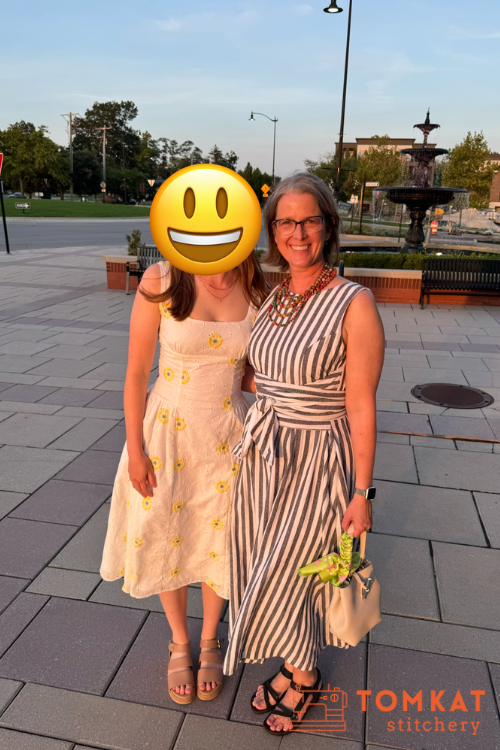
Her sewing journey has included both hits and misses, but every project has helped her better understand her body, her preferences and the adjustments she needs most often.
You do not have to master every possible fitting adjustment before you begin. Start by noticing the same issues that appear repeatedly in your clothes. Once you learn how to correct those patterns, you will have more freedom to sew across different pattern companies, use the fabrics you love and create clothing that feels as good as you imagined it would.
There are simply too many beautiful patterns and fabrics waiting for you to settle for “It’s okay.”
*Affiliate links included—thank you for supporting my work! No extra cost to you, but I may earn a commission. Offers may change.