6 Jacket Patterns to Sew for Fall
I may still be finishing a few summer projects, but it is time to start thinking about fall sewing. Jackets take longer to sew than a simple top or dress, so starting now means your new layer will be ready when cooler weather arrives.
Recently, I shared three of my favorite fabrics for fall jackets: cotton twill, corduroy, and bouclé. Now I’m pairing each fabric with two jacket patterns that make the most of its texture, body, and drape.
Read on for all six pattern ideas, or watch the video on YouTube to see the ready-to-wear inspiration behind each pairing.
Cotton Twill Jacket Patterns
Cotton twill is stable, durable, and easy to sew. Its diagonal weave gives it enough structure for collars, patch pockets, and topstitching while still being comfortable for an everyday jacket.
Fabric weight matters. A lighter twill creates a more relaxed jacket, while a heavier twill or canvas emphasizes the pattern’s structure. If you want a practical fall jacket that can become a wardrobe workhorse, cotton twill is an excellent choice.
Pattern Emporium Downtown Jacket
The Pattern Emporium Downtown Jacket* is a modern chore-style jacket available in regular and roomy fits. I made the roomy version in cotton twill, and it has become one of the jackets I reach for most often during the fall.
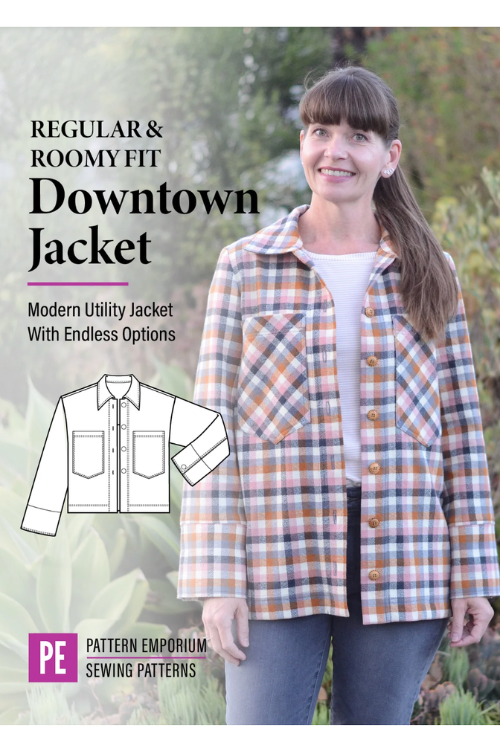
I interlined mine with flannel for extra warmth and used suede on the collar as a contrasting detail. It finishes around the high hip, has a relaxed shape, and includes two large front patch pockets. If I make it again, I may add an inseam or lower patch pocket where I can easily put my hands.
The pattern also includes full-bust front options, which I find particularly helpful. It comes together easily, layers well, and fills that casual everyday-jacket role beautifully.
Itch to Stitch Causeway Bomber
I chose the Itch to Stitch Causeway Bomber* because it is fully lined and can be made reversible. I was a pattern tester when it was released, and the version I made can genuinely be worn with either side facing out.
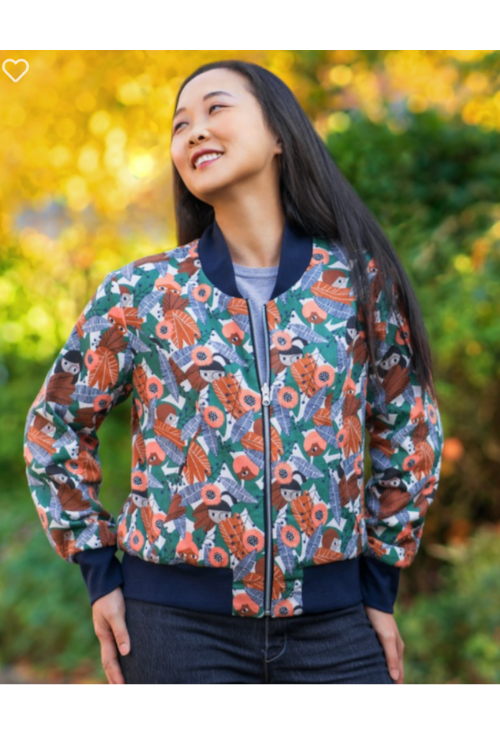
My Causeway uses a silk jacquard on one side and a rayon jacquard on the other, but cotton twill would create a more casual jacket. It provides enough structure to hold the bomber silhouette without making it too stiff.
Twill also makes a great canvas for embroidery, patches, decorative pins, or contrasting ribbing. It is a good example of how fabric choice can completely shift the personality of a pattern.
Corduroy Jacket Patterns
Corduroy brings instant texture and warmth to a fall wardrobe. It can look sporty, vintage, rustic, or polished depending on the width of the wales and the jacket pattern you choose.
What does the wale number mean? The number tells you approximately how many raised ridges appear in one inch. A lower number means wider wales and usually more structure. A higher number means finer wales and often more drape.
Wide-wale corduroy works well for structured jean jackets and chore coats. Fine-wale corduroy is usually better for relaxed silhouettes and oversized sleeves that need more movement.
True Bias Tobie Jacket
The True Bias Tobie Jacket immediately caught my attention. It is an oversized, fully lined bomber with dropped shoulders and two views. One has traditional ribbed bomber details, while the other includes a funnel collar, fabric-covered elastic, and large patch pockets.
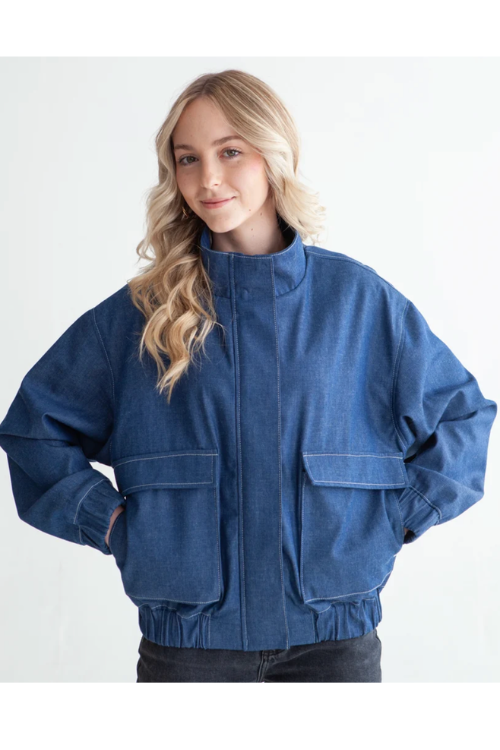
For this relaxed shape, I would choose a fine-wale corduroy instead of a heavy, wide-wale option. A finer cord will support the jacket’s silhouette while allowing the sleeves and body to hang more naturally.
The Tobie is listed as an advanced pattern, so it may not be the best choice for your first jacket. If you are ready for a more involved project, though, it offers plenty of interesting details, and True Bias has created a complete sew-along.
Seamwork Parker Chore Coat
The Seamwork Parker* is a functional, gender-neutral chore coat with a straight cut, raglan sleeves, and plenty of pockets. Jenni and I have both made this pattern, and we wear our jackets all the time.
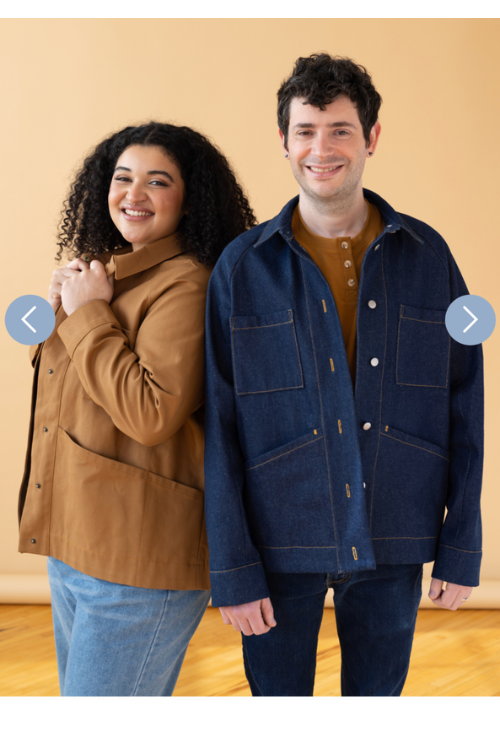
Corduroy is one of the recommended fabrics for Parker. You could use it for the entire jacket or combine it with cotton twill on the collar, cuffs, or pockets. We often see twill chore jackets with corduroy collars in ready-to-wear, but you could easily reverse that combination.
Parker is especially good if practicality is high on your list. It includes chest pockets, large lower pockets, and an interior patch pocket. The finished jacket feels current while still being something you can put to work in your everyday wardrobe.
Bouclé Jacket Patterns
Bouclé is all about texture. It is made with looped or irregular yarns that create a distinctive nubby surface. Many woven bouclés have a loose weave, so they may require careful handling, stabilization, and a lining.
You may also find knit fabrics sold as bouclé. These often have some give without being especially stretchy. Teddy fabrics and boiled wool can create a similar textured look and may work for relaxed jacket silhouettes.
Because these fabrics can have very different constructions, always check the pattern’s stretch requirements, finished measurements, and fabric recommendations before cutting.
Style Arc Delphine Woven Jacket
The Style Arc Delphine Woven Jacket is a classic choice for woven bouclé. It is a semi-fitted, fully lined jacket with optional frayed details, giving you the polished lady-jacket look we see returning season after season.
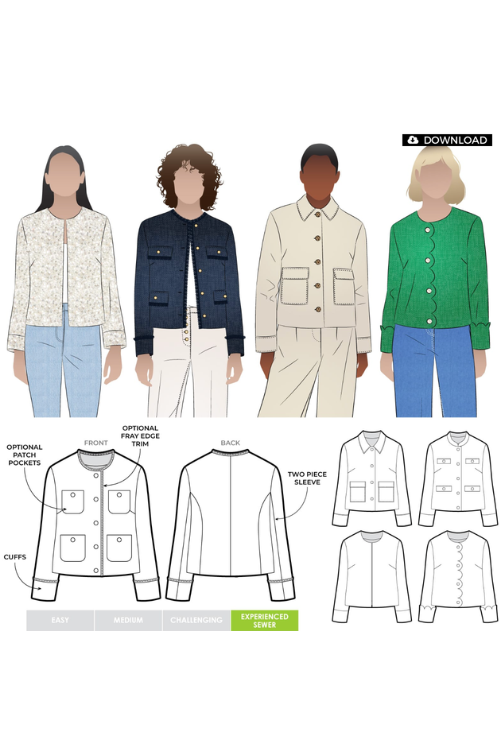
I have made the Delphine before and would love to sew another one. Bouclé gives its simple silhouette plenty of visual interest, allowing the fabric to remain the focus.
If you use a loosely woven bouclé, pay attention to fraying and consider stabilizing the fabric before construction. Test your interfacing on a scrap so you can add support without flattening the texture. A lining will also protect the interior seams and help the jacket slide easily over your clothes.
Seamwork Andi Jacket
The Seamwork Andi* is designed for medium- to heavyweight knits and has a relaxed, gender-neutral fit. It could be an interesting option for knit bouclé, teddy fabric, or boiled wool with some give.
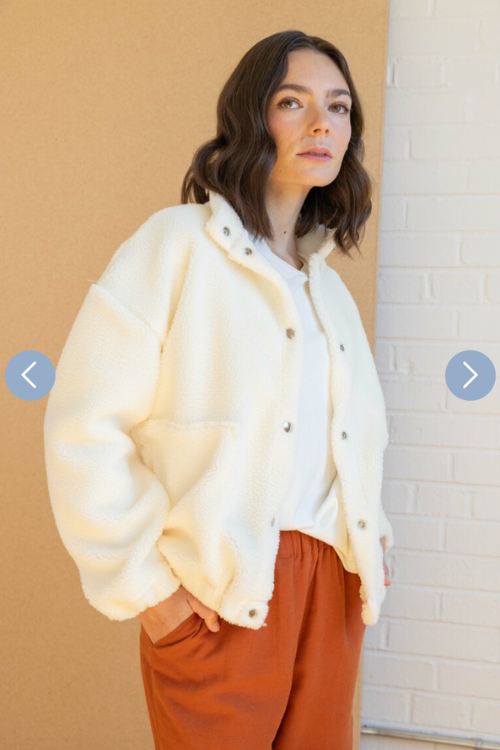
Could you make the Andi from woven bouclé? Possibly, but I would not assume every woven will work. Compare the finished garment measurements with your body measurements and confirm the required stretch. A fabric with no give can restrict movement even when the jacket appears oversized.
Seamwork members can also access a bonus hood variation. The original pattern can be purchased separately, but bonus variations are a membership benefit. You can find our offer for 50% off the Unlimited membership tier on the TomKat Stitchery Resources page.
Choosing Your Jacket and Fabric
Start by deciding what role you want your jacket to fill. Cotton twill is practical and easy to wear. Corduroy adds casual texture and personality. Bouclé creates a polished layer that can dress up simple wardrobe basics.
Next, consider the silhouette. Does the pattern need structure to hold its shape, or does it need drape for relaxed sleeves and movement? Even within one fabric category, the weight and construction can dramatically change the finished jacket.
These pairings are starting points rather than strict rules. The Causeway could be beautiful in bouclé, the Downtown could work in corduroy, and the Tobie would be striking in cotton twill. Choose the combination that best matches the jacket you have pictured.
Fall will eventually arrive. Pick your fabric, choose a pattern that fits your style, and start sewing now so your handmade jacket is ready when the temperatures begin to drop.
*This post may contain affiliate links. When you purchase through one of these links, I may earn a small commission at no additional cost to you. Thank you for supporting TomKat Stitchery.