How to Choose the Right Sewing Machine Needle for Every Fabric
If sewing machine needles have ever felt weirdly overwhelming, you’re not alone. There are so many options out there: different types, sizes, finishes, and specialty uses. It’s easy to either overthink it… or never think about it at all. Today I want to talk about the one of the most overlooked tools in your sewing space- the sewing machine needle.
Whether you’re brand new to garment sewing, getting back into sewing after a break, or you’ve been sewing for decades and tend to grab whatever needle is already in the machine (no judgment), this guide will help you simplify needle selection and sew with more confidence. Read on or watch here:
My Go-To Needle Brand (And Why)
Before we dive in, a quick note on brands. My personal preference—for both my home machines and my industrial machine—is Schmetz Needles. That’s simply what works best for me and what I keep stocked since sewing is literally my job. There are other good brands out there, and this isn’t about one being “better,” but for clarity, all of the needles mentioned here are Schmetz needles.
Why There Are So Many Types of Sewing Needles
Every sewing machine needle is designed with specific features that affect how it performs:
- The needle point determines how it interacts with fabric (piercing vs. slipping between fibers)
- The eye affects what type and weight of thread can pass through smoothly
- The shaft and scarf influence stitch formation and how the needle works with your machine
Different fabrics behave differently—so different needles exist for a reason. That said, you do not need 15 types of needles to sew garments successfully.
If you are looking for a really DEEP DIVE in all things needs, Schmetz has a great and informative Needle Guide that you can reference.
My Go-To Needles for Garment Sewing
If you sew garments, I’d argue you can handle about 80–90% of projects with just two types of needles in two sizes.
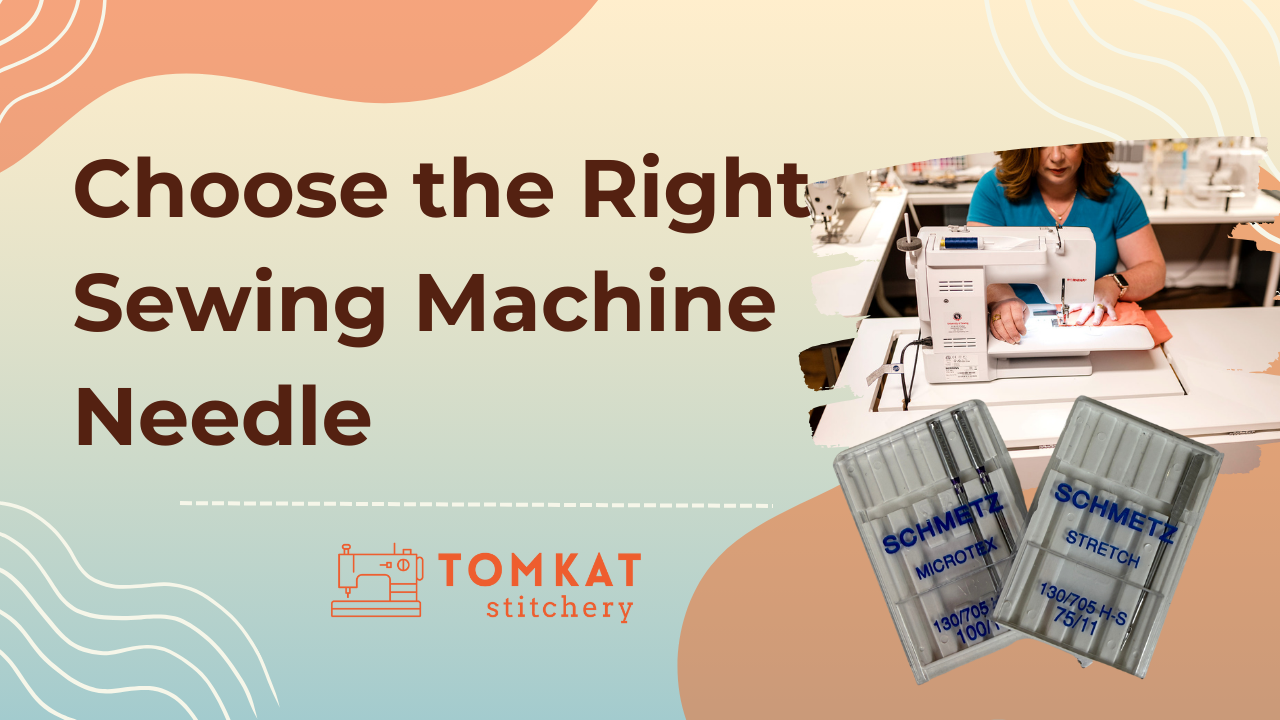
1. Microtex Needles (Sizes 10 & 12)
These are my absolute workhorses for woven fabrics.
- Best for: Wovens
- Why I love them: The sharp point cleanly pierces fabric instead of pushing fibers aside
- Size 10: Lightweight fabrics
- Size 12: Medium to slightly heavier weight fabrics
Microtex needles help prevent skipped stitches, fabric bunching, and thread nesting at the start of seam. I always keep these two sizes stocked, and they live permanently in my needle drawer.
2. Stretch Needles (Sizes 10 & 11)
Stretch needles are not the same as ballpoint needles.
- Best for: Knits with elastane, lycra, or elastic
- Why they work: Designed specifically for stretchy fibers
While ballpoint needles can work on some knits, stretch needles perform noticeably better when elasticity is involved. I keep:
- Size 10 for lighter knits
- Size 11 for heavier knits
If I’m sewing ponte pants (like my Bridget Ponte Pants), a size 12 stretch needle is my go-to.
➡️If you’re just starting out, Schmetz Microtex 10 & 12 + Stretch 10 & 11 will cover almost everything.
Why I Skip Universal Needles
Universal needles technically work for a lot of things—but in my experience, they don’t do anything exceptionally well. I prefer using a woven-specific needle for wovens and a stretch-specific needle for knits. The only exception is that I sometimes use Universal Needles in my serger and coverstich machines (keep reading for my thoughts on that).
Specialty Needles I Keep on Hand (Project Dependent)
Jeans Needles (Sizes 16 & 18)
- Best for: Denim and heavy fabrics
- Wider eye = great for topstitching thread
- Handles thick layers without thread shredding
I don’t bother switching to a topstitching needle for denim—jeans needles handle it beautifully.
Leather Needles
If you’re sewing real leather or faux leather, this is non-negotiable.
- Leather needles cut a hole instead of separating fibers
- The triangular point on a leather needle helps pierce skins cleanly
Once leather is pierced, the hole is permanent—so the correct needle matters.
Black Super Fine Needles (Ultra Lightweight Fabrics)
This is a newer Schmetz needle, and it is magic for:
- Chiffon
- Silk organza
- Very delicate wovens
If your fabric is so fine that it’s gathering or shifting no matter what you do, this needle is worth trying. Definitely a specialty tool—not a must-have unless you sew these fabrics often.
Embroidery Needles
If you have an embroidery machine, use an embroidery needle.
- Designed for high friction stitching
- Optimized for embroidery thread
I love the Schmetz gold embroidery needles—they make a noticeable difference.
Needles I Don’t Use Often (And Why)
Topstitching Needles
I rarely use these because:
- Jeans needles handle topstitching thread just fine for garments
- I only reach for them when using very thick thread for specialty projects
Overlock Needles
These exist—and I’m sure they’re great—but I don’t personally use them.
For my serger and coverstitch machines, I often:
- Use universal needles that came with kits
- Or leave Microtex needles installed
Is it perfect? Probably not. Does it work? Yes.
➡️The Answer to the BIG QUESTION
When Should You Change Your Sewing Machine Needle?
This part matters a lot.
Change Immediately If:
- You sew with silk (silk dulls needles fast)
Other Signs It’s Time:
- Skipped stitches
- Thread fraying or breaking
- A weird “thunking” sound while sewing
As a general rule, I change my needle every 2–3 projects, depending on fabric and intensity. You’ll feel—and hear—the difference with a fresh needle.
When in doubt:
- Rethread your machine
- Change the bobbin
- Replace the needle
Those three steps solve so many sewing issues.
Final Thoughts on Sewing Machine Needles
Sewing needles don’t have to be complicated. With a small, intentional needle stash and a basic understanding of how fabric and needles interact, you’ll avoid frustration and get cleaner, more professional results.